

AI Agent Observability

Trace every AI Agent session, model call, tool execution, and risk signal

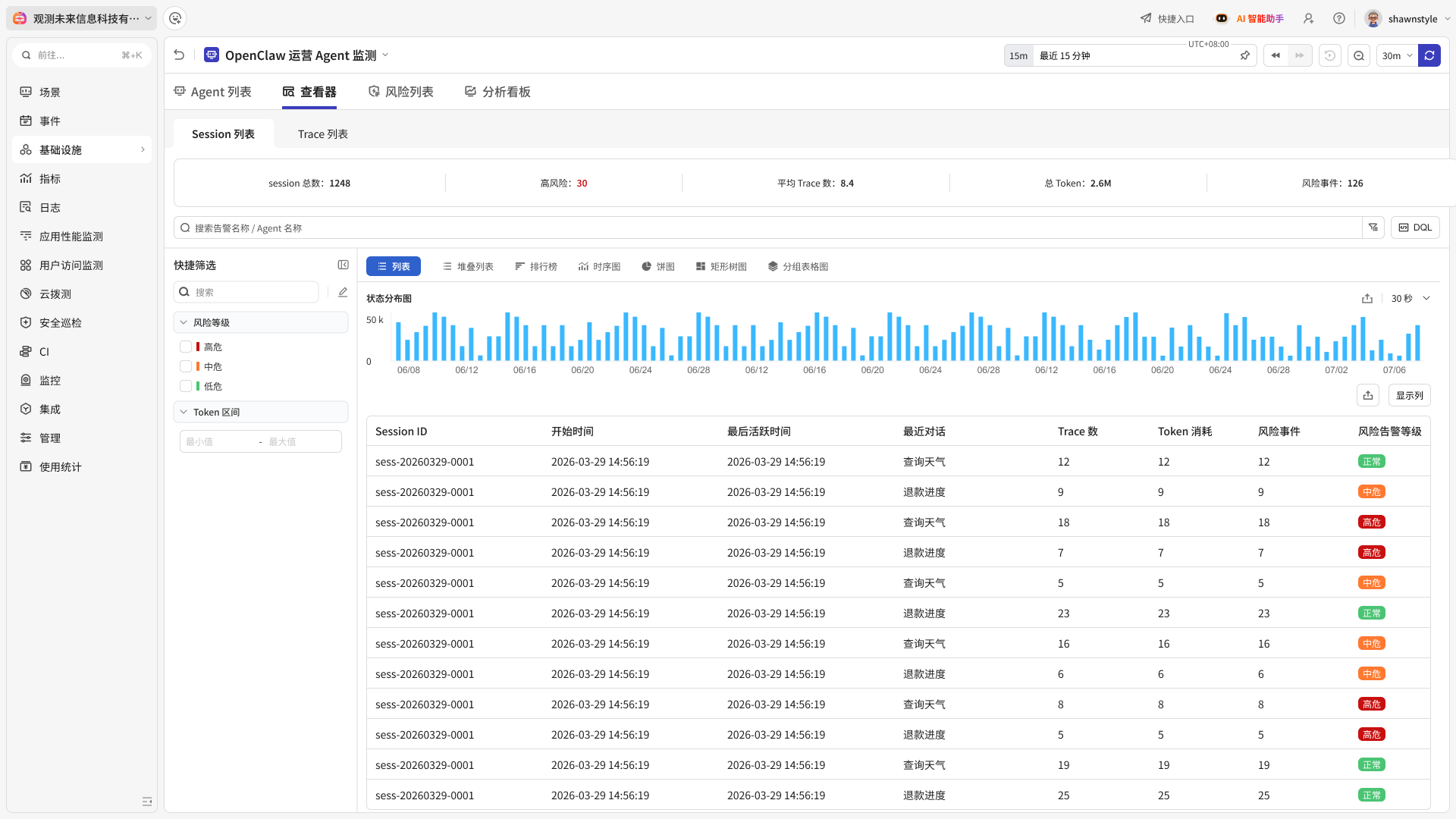
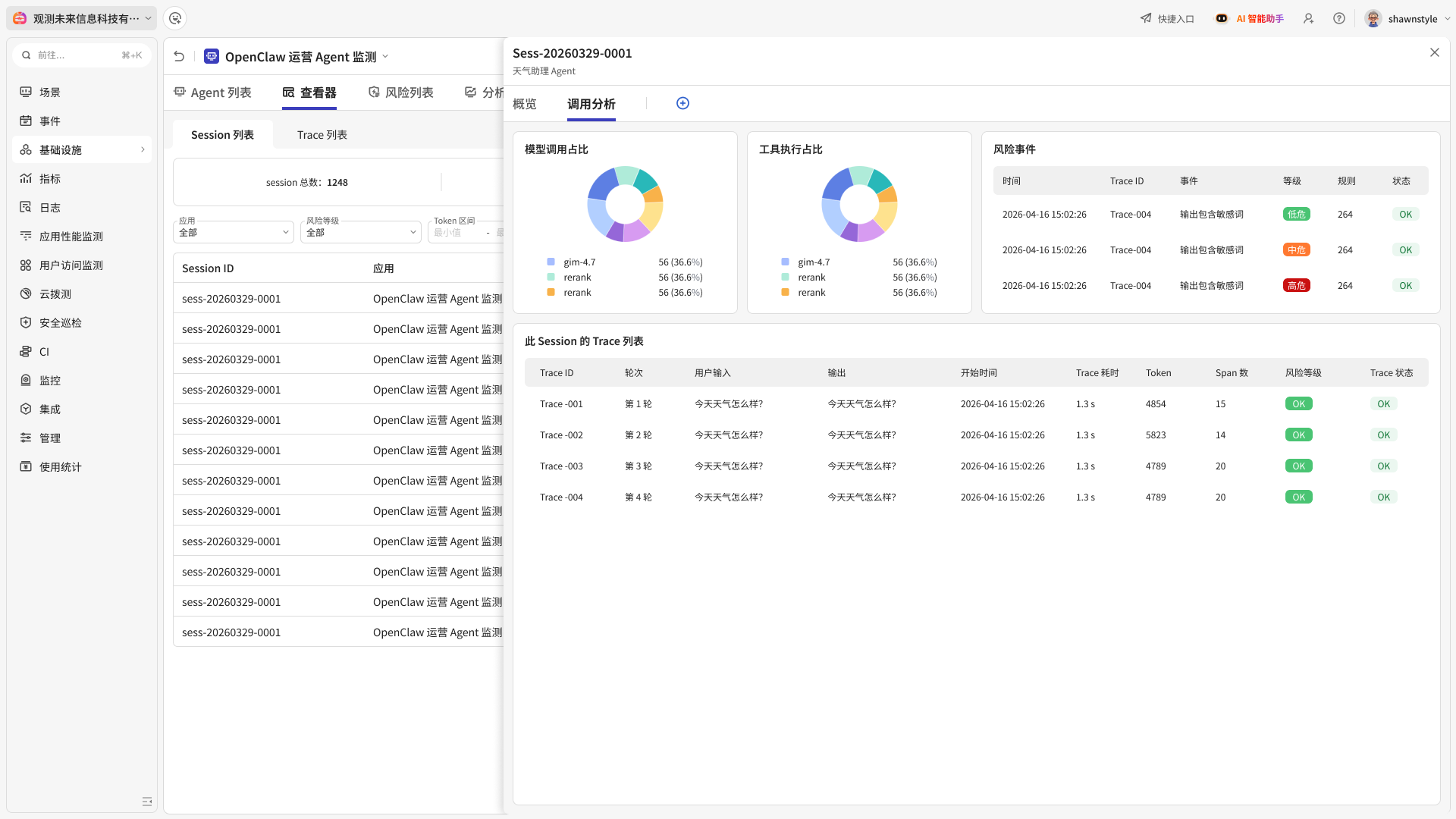
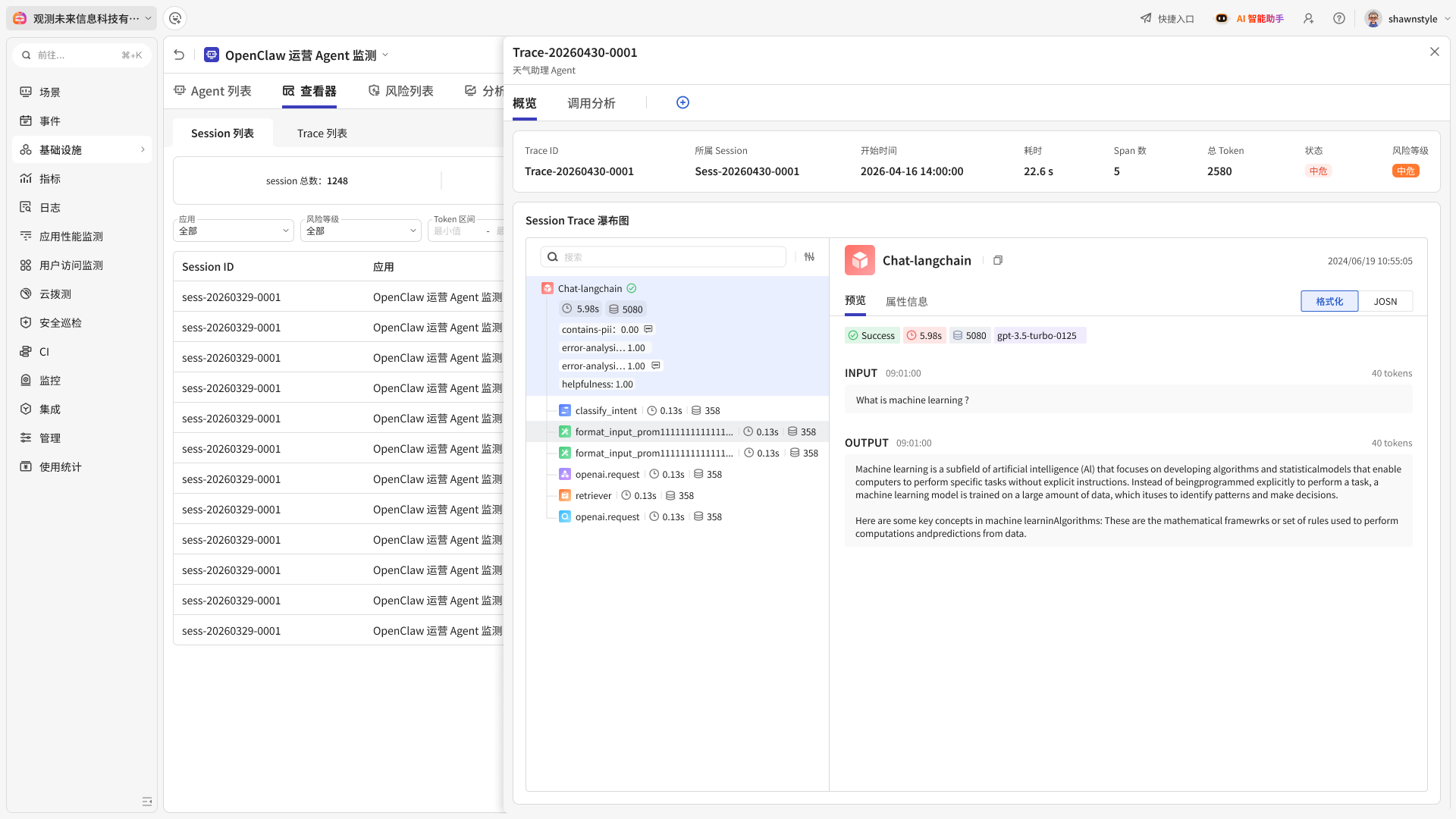
Guance AI Agent Observability connects Session, Trace, Span, model calls, tool calls, latency, Token usage, and risk events so AI engineering and platform teams can understand how an Agent behaved, where execution slowed or failed, and what it cost.

AI Agent Observability overview

AI Agent Observability goes beyond checking whether a model endpoint returned successfully. It connects Prompt and Completion data with model calls, tool execution, retrieval, guardrails, latency, Token usage, and the business workflow around each Session and Trace.

Observe the AI Agent workflows your teams already run

Create a common operational view across multi-turn conversations, model calls, tool execution, Token cost, and risk events for supported Agent runtimes and custom enterprise applications.

OpenClaw
Hermes
Claude Code
Codex
Other AI Agents

Operational challenges

Agent execution is a black box:A final response does not explain the intermediate model, retrieval, and tool steps that produced it.

Token cost and latency are difficult to control:Long context, retries, and repeated tool output can make one task unexpectedly expensive or slow.

Risk events are hard to locate:A dangerous command or sensitive-data action must be tied back to the exact Session, Trace, and Span.

AI workflows are disconnected from production systems:Without shared service and business context, teams cannot measure downstream impact or ownership.

How Guance helps

Session and Trace analysis:Reconstruct each conversation, turn, and execution path with stable identifiers.

Model and tool-call analysis:Compare requests, arguments, outputs, status, duration, and call sequence.

Token and performance monitoring:Measure input, output, cached Token use, latency, retries, and cost drivers.

Risk-event correlation:Link guardrail and behavioural events to the exact action and surrounding context.

AI Agent investigation workflows

More content

Frequently asked questions

How is AI Agent Observability different from LLM Observability?

LLM Observability focuses on model requests, responses, latency, Token usage, and quality. AI Agent Observability extends that view to multi-turn Sessions, orchestration, retrieval, tool calls, state changes, and risk events across the full Agent workflow.

Which signals can Guance collect for an AI Agent?

Depending on instrumentation, Guance can analyse Session and Trace identity, model provider and model, input and output Tokens, latency, Span hierarchy, tool calls, arguments, status, retries, risk events, and custom business attributes.

How do teams instrument an AI Agent application?

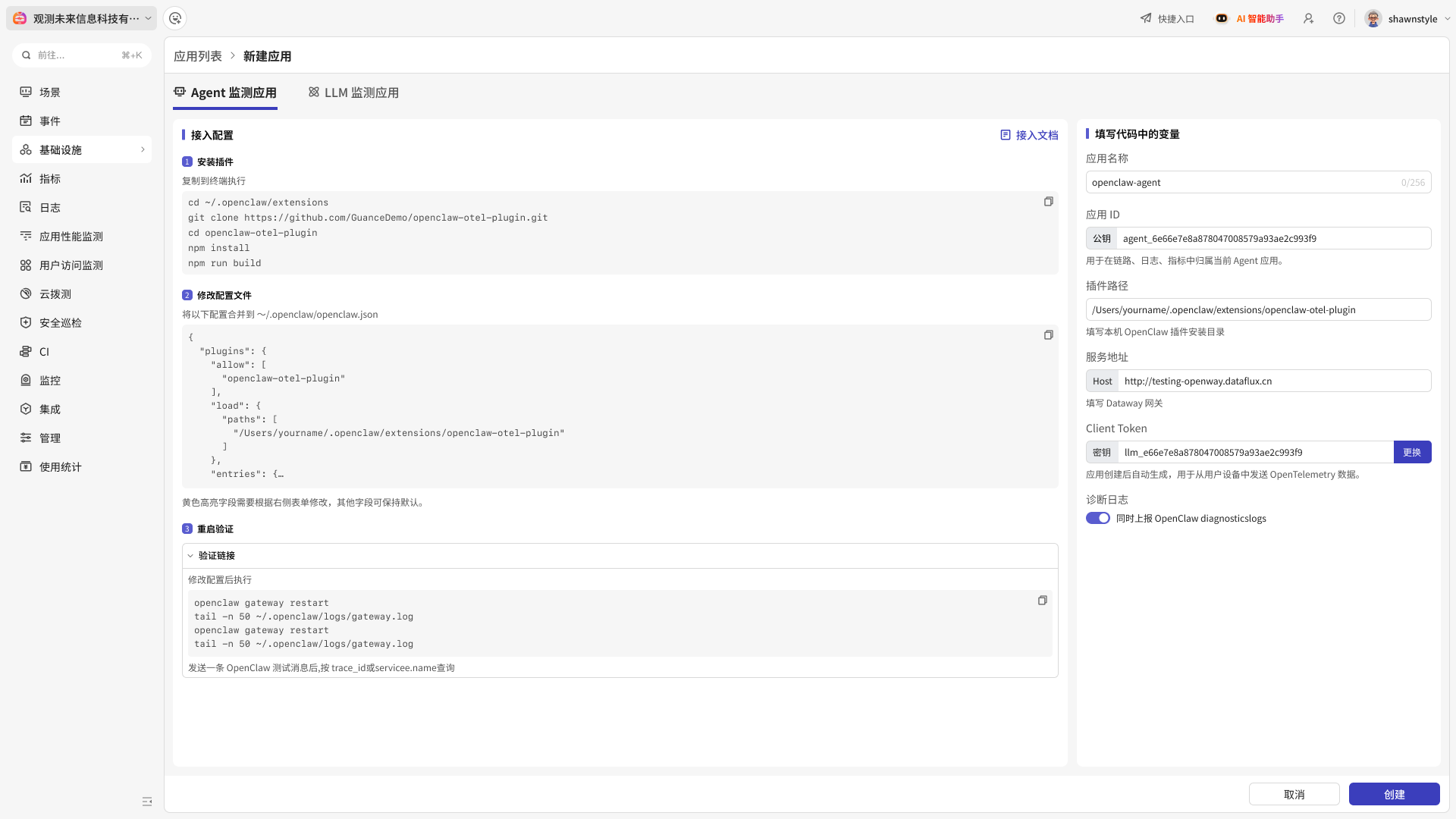
Create an Agent or LLM monitoring application, instrument the runtime with supported OpenTelemetry and GenAI semantic attributes or the documented integration, and preserve stable Session, Trace, Agent, model, and business identifiers.

Who uses AI Agent Observability?

AI engineers, application developers, platform teams, SREs, security teams, and product owners use it to improve Agent reliability, performance, cost control, quality, and operational accountability.

Related reading

Continue exploring AI Agent operations