

Contact us

Join the community

Scan with WeChat
Join the official community group

Try Guance

Start online with usage-based pricing and a true cloud service.

Get started

Choose a Guance edition

Code repositories

Service Catalog / Asset Directory

Service catalog

The unified catalog is the unified asset center within the Guance. It manages services, hosts, databases, queues, and cloud resources under the same model, and presents dependencies and hierarchies through relational topology, allowing humans and AI AI Agent to understand "what's in the system, who is responsible, and how they relate to each other" in a unified way.

Unified catalog
Book a demo

What problems does a unified catalog solve?

Enabling services, hosts, databases, and cloud resources to be understood by a unified model

The unified catalog is the unified asset center within the Guance. It manages services, hosts, databases, queues, and cloud resources within a single model, and presents object dependencies through relational topology, enabling R&D, SRE, operations, and AI AI Agent to understand what is in the system, who is responsible, and how they relate to each other in a unified way.

Unified sources
It also handles APM automatic discovery, DataKit reporting, cloud asset collection, and YAML declarations.
Unified targets
Covers core entities such as system, service, host, database, queue, and supports custom extensions.
Unify context
Make it clear in one place that "what the object is, who is responsible, what it depends on, and which view to look at."
Unified entrance
Under "infrastructure," it becomes the first gateway to understand the full picture of system assets.
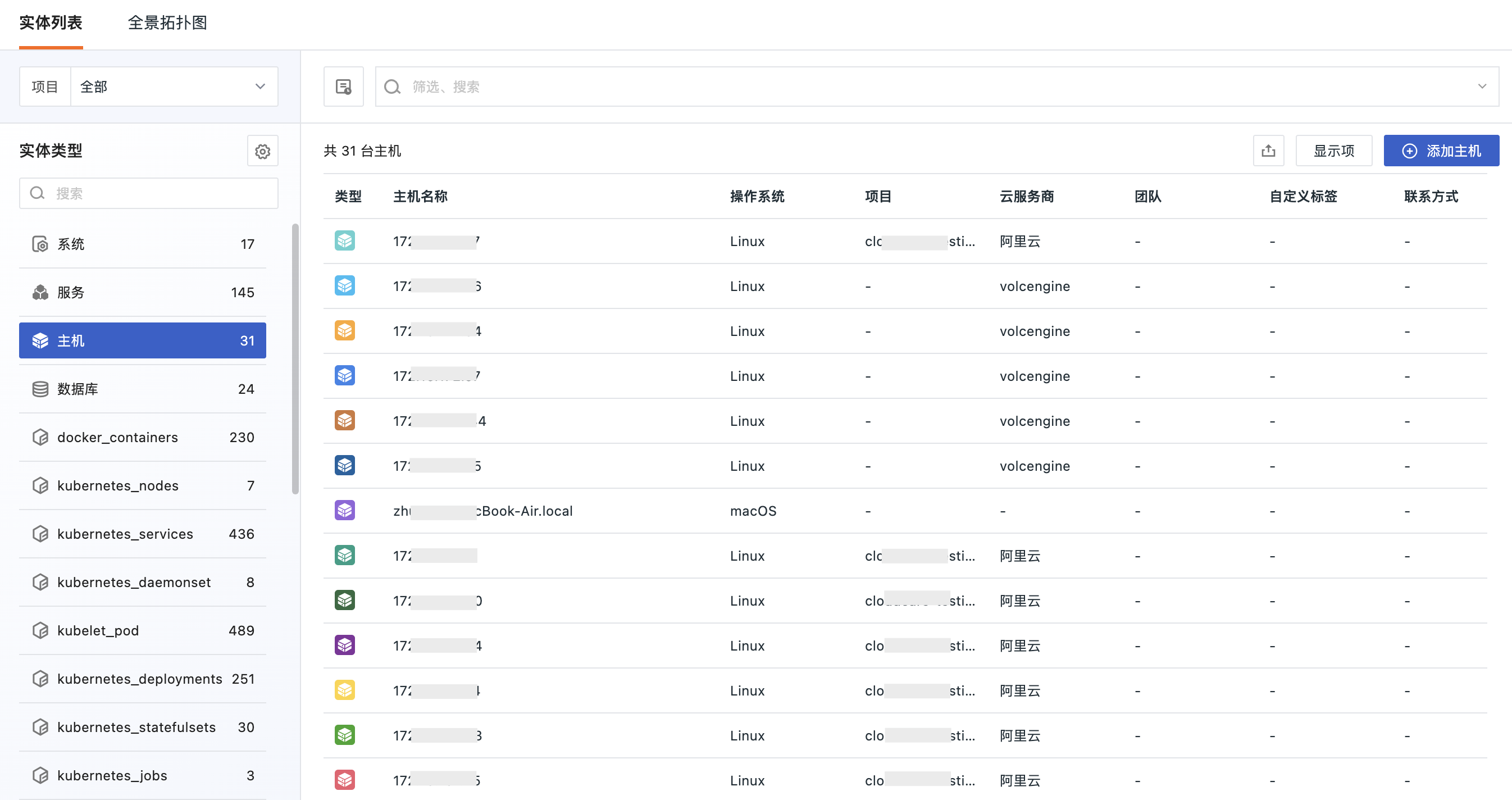
Integrate automatic discovery, data collection reporting, and manual declarations into the same directory
Unified Catalog can simultaneously handle APM automatic discovery, DataKit reporting, cloud asset collection, and YAML declarations. Services, hosts, databases, queues, and cloud resources are no longer scattered across different entry points; teams can first connect scattered sources into the same directory, then continue to supplement business semantics around real objects.
Integrate automatic discovery, data collection reporting, and manual declarations into the same directory
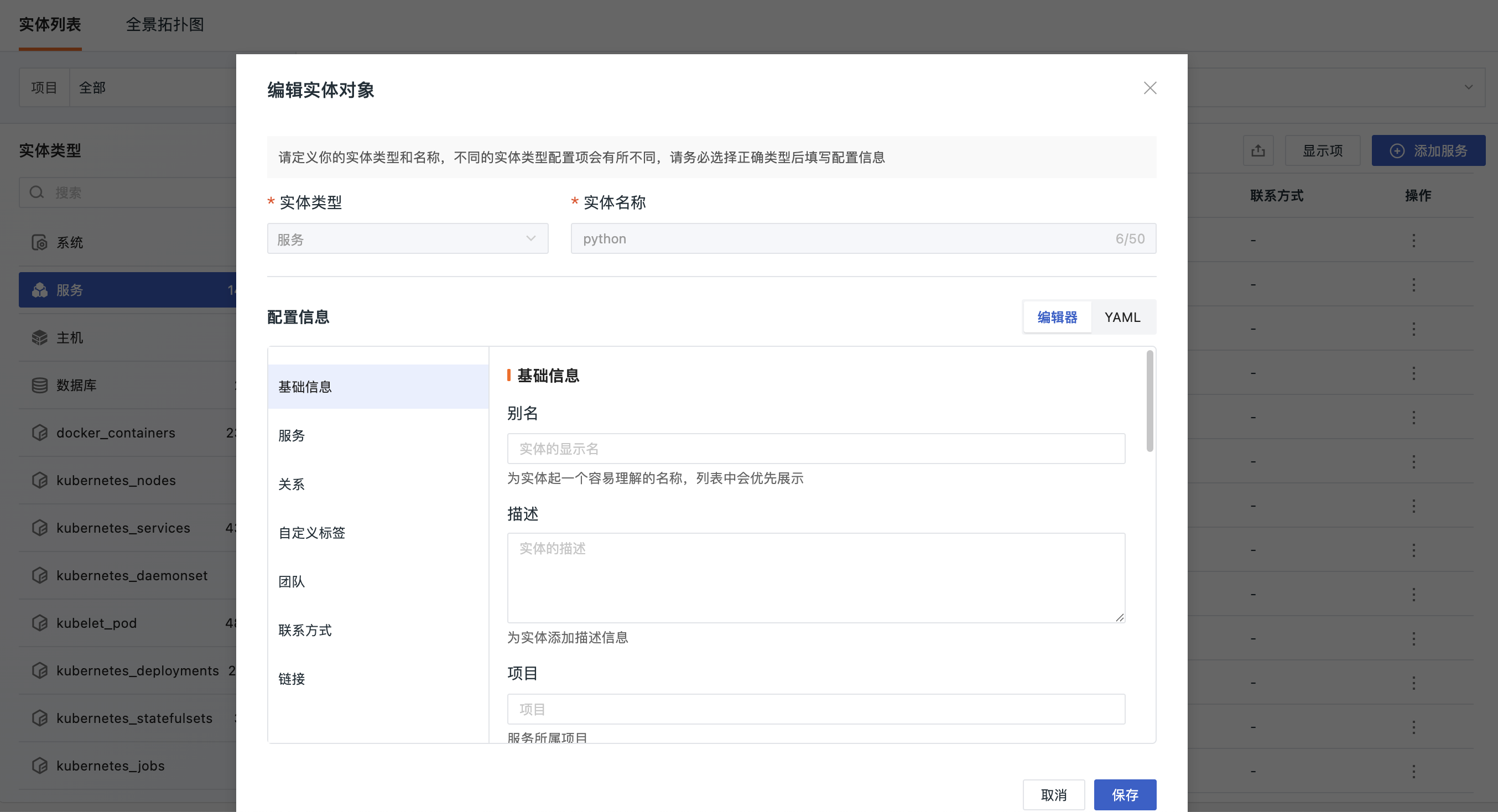
Define services, hosts, databases, and business objects using Entity Schema
The Unified Catalog is an entity management framework that can evolve with your business. System presets core entity types such as system, service, host, database, queue, ensuring a stable framework for directories; Teams can also create custom entity types to manage their own unique business objects.

For humans, a clear entity definition reduces the communication cost of "what exactly is this object?" For AI AI Agent, a stable schema is the foundation for understanding systems, generating analytical suggestions, and executing subsequent actions.
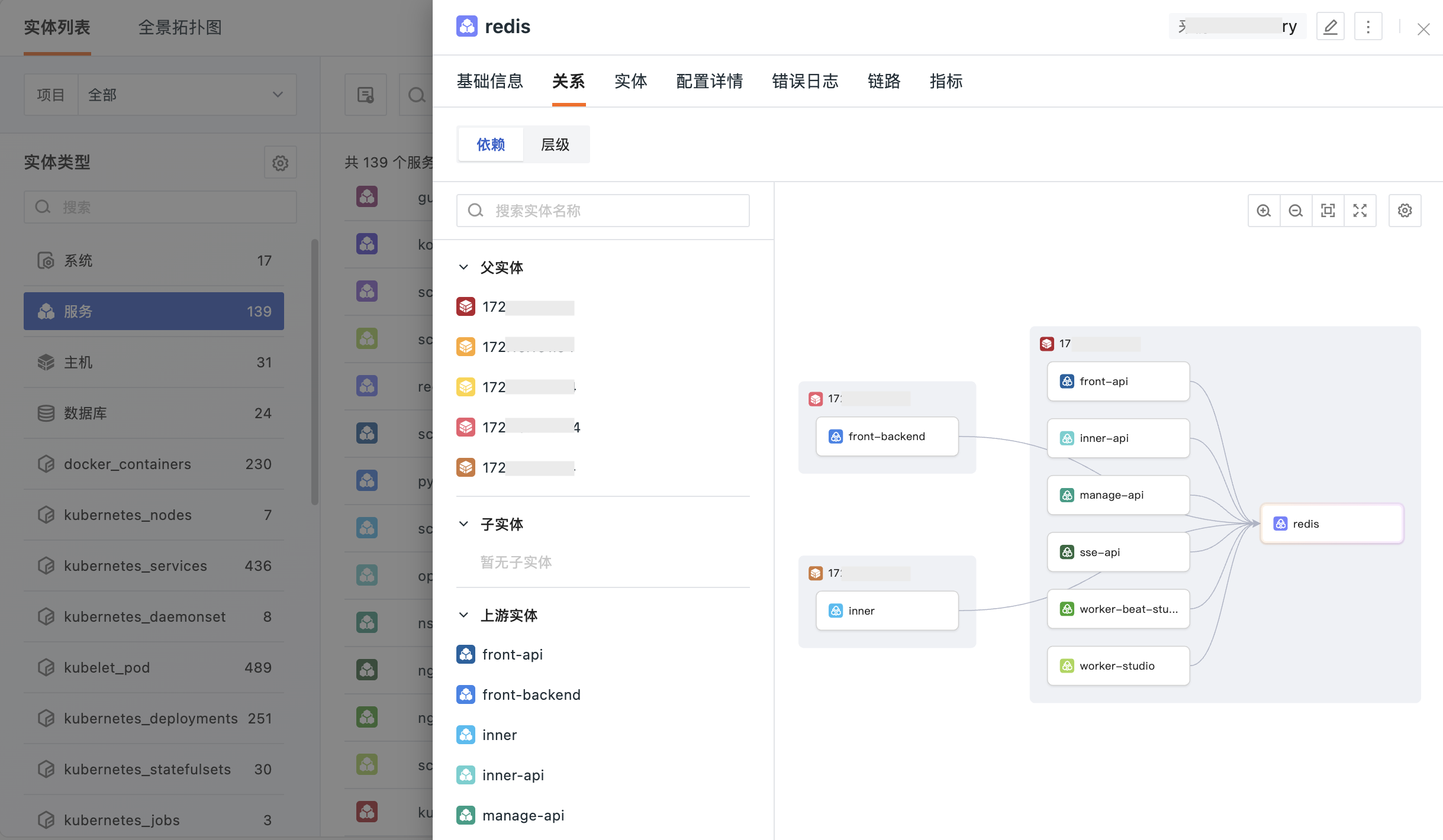
See ownership, dependencies, and scope of influence clearly in the details and relationship views
On the entity list page, the system dynamically generates field columns based on the corresponding YAML configuration, supports user control of display items, and displays key information such as tags, teams, contact information, and related links. Whether exporting current results or quickly adding entities based on current types, the entire management process is closer to a true asset workbench than a simple spreadsheet.

After entering entity details, users can further view basic information, contact information, related links, viewer entry, and most importantly, the relationship view. The relationship view supports both dependency and hierarchy modes: you can view both call relationships and ownership structures; You can search for upstream and downstream and parent-child entities in the left list, or continue exploring centered on the current entity in the topology on the right.
See ownership, dependencies, and scope of influence clearly in the details and relationship views
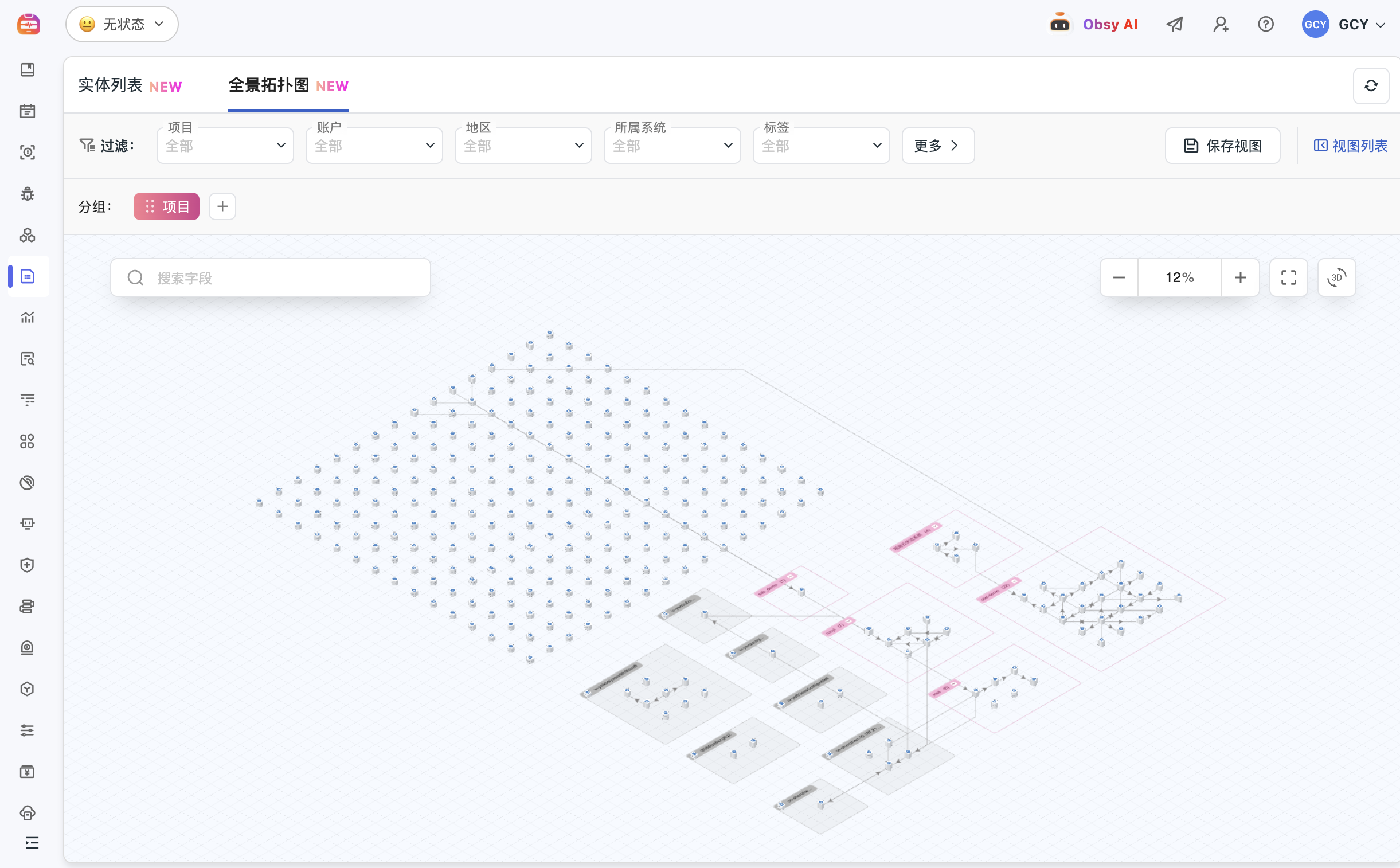
Access the cloud resource and business object workbench from the infrastructure entry
For cloud resources on different platforms like AWS and Alibaba Cloud, the Unified Catalog first abstracts a set of shared fields through the Universal Cloud Resource Schema, such as unique identifier, name, cloud vendor, region, and entity type. This way, cloud resources from different sources can be incorporated into the same directory language, providing a consistent display and management experience.

As for the unique differentiating attributes of various resources, such as S3 capacity information or RDS engine versions, they can be fully preserved by expanding metadata. Once the dedicated schema matures, it can be smoothly upgraded to more standardized definitions. This process ensures current availability and prevents future lockdowns in early designs.

Frequently asked questions

What is a unified catalog?

A unified directory is one of Guance's product capabilities. When services, hosts, databases, queues, and cloud resources lack unified definitions, a unified directory integrates objects, affiliations, dependencies, hierarchies, and related links into the same model, allowing both humans and AI to understand what's in the system, who is responsible, and how they relate to each other. It helps teams identify anomalies, pinpoint root causes, and continuously optimize system stability within a unified context.

Which teams are suitable for the unified catalog?

The unified catalog is suitable for R&D, SRE, operations and maintenance, platform engineering, and business technology teams, especially for complex systems that need to troubleshoot issues across metrics, logs, links, and infrastructure data.

How is the unified catalog linked to other observation data?

Guance associates unified catalog-related data with logs, metrics, links, access experiences, alerts, and resource objects through unified tags, context navigation, and DQL query capabilities, helping teams reduce tool switching.

Related reading

Want to see how the unified directory fits into your business system?

Book a demo

Unified CatalogIt's not just a resource catalog, but a business semantic layer for human-machine sharing in the AI era