Frequently asked questions
What problems does network performance monitoring mainly solve?
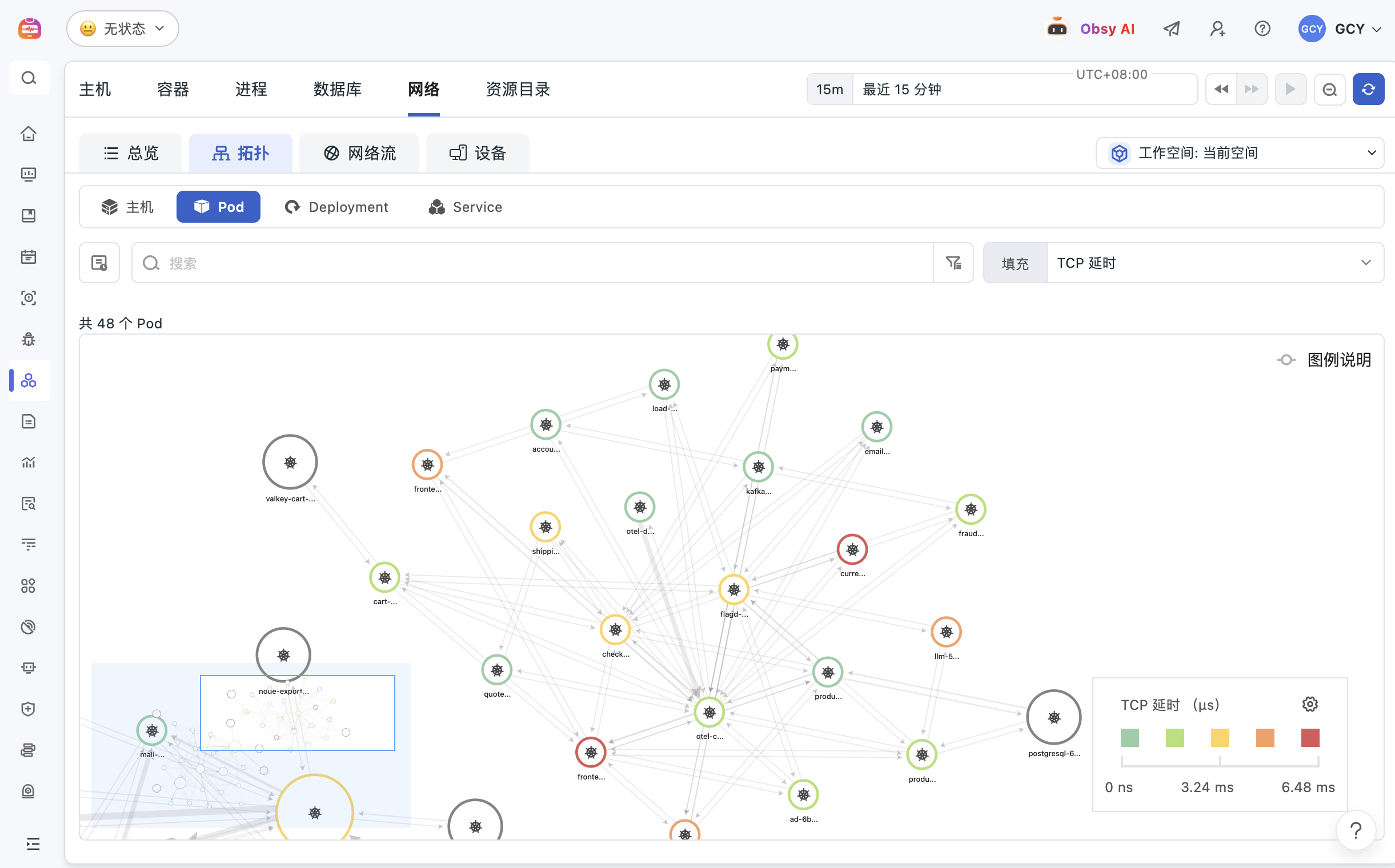
Network performance monitoring is mainly used to identify latency, packet loss, abnormal connections, traffic spikes, and dependency path issues between hosts, pods, services, and cloud resources. Guance analyze network issues back into application and infrastructure contexts through eBPF, network topology, and BPF network logs.
Do I need to modify the application code to collect network data using eBPF?
No, it is not necessary. eBPF can collect connection, traffic, and network performance data at the system layer without relying on application code for pinning. Teams can first integrate basic network metrics and logs, then combine services, pods, hosts, and traces for correlation analysis.
What is the difference between network topology and BPF network logs?
Network topology is suitable for viewing traffic directions and dependencies among hosts, pods, deployments, and services from a holistic perspective; BPF network logs are suitable for drilling down specific connections, ports, protocols, request paths, and exceptions when evidence is needed; combining the two can move from overview to detail.
Is network performance monitoring suitable for Kubernetes scenarios?
Fitting. In Kubernetes environments, the relationships between Pods, Services, Deployments, and nodes are complex, and network issues are often difficult to reproduce. Guance can observe network status by namespace, workload, Pod, service, and host dimensions, and correlate container, log, and link data.