Security Information and Event Management (SIEM)

Detect threats in security logs and keep investigation and response connected

Guance SIEM brings security logs, audit events, detection rules, asset context, alerts, and incident workflows together so security and operations teams can identify suspicious behaviour, prioritise risk, investigate evidence, and track response from one workspace.

Detect threats in security logs and keep investigation and response connected

Guance SIEM supports the way we operate globally: compliance checks, configuration audits, behavioural analysis, and investigation are brought into one workflow so potential security issues can be found and understood earlier.

———— ANTA Group observability programme lead

What SIEM helps you solve

Turn high-volume security telemetry into prioritised, explainable threat evidence

Security teams rarely lack data; they lack connected context. Guance SIEM combines log search, security analytics, detection rules, asset evidence, alerts, and incident tracking so analysts can determine what happened, which systems are affected, and what should happen next.

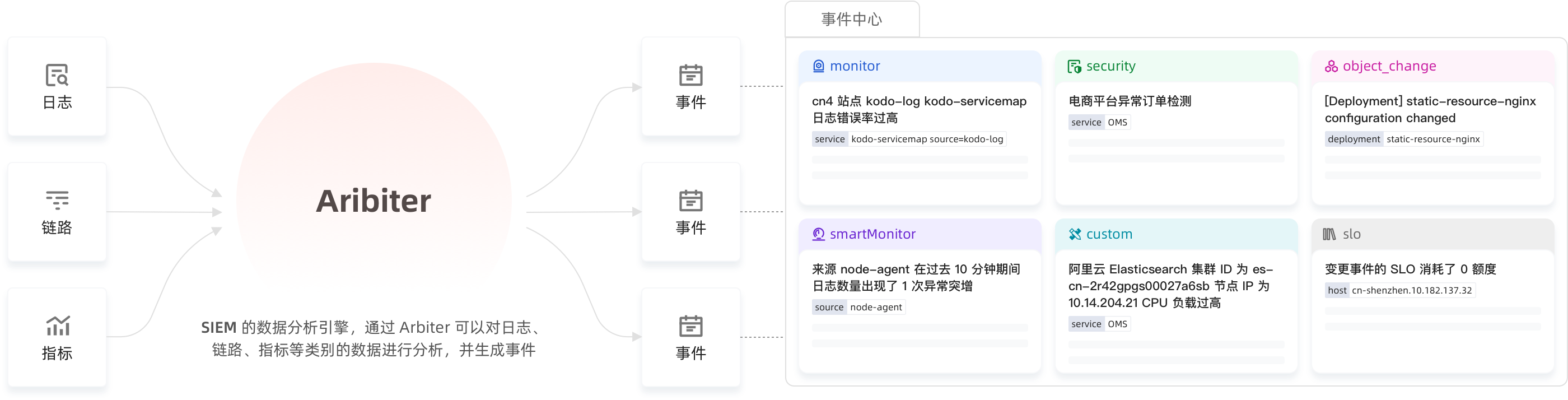
Arbiter detection and validation engineCore engine

Arbiter detection and validation engine
Security logs are noisy. Start with suspicious behaviour, not raw volume
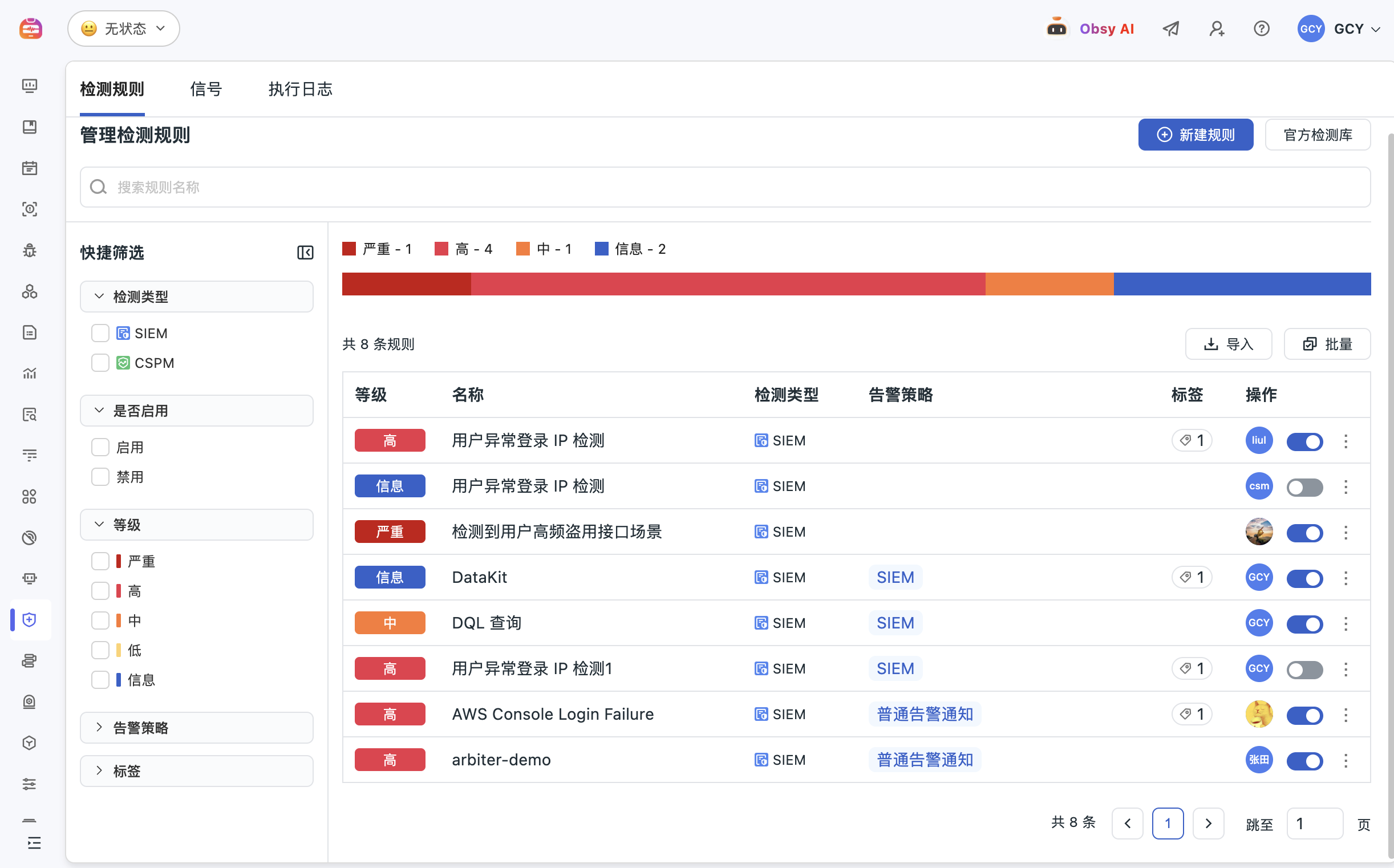
Search and analyse identity, host, cloud, application, and audit activity in one workspace. Detection rules surface events such as unusual sign-ins, privilege changes, cross-account activity, and malicious requests with the triggering evidence attached.
View documentation
Security logs are noisy. Start with suspicious behaviour, not raw volume
An alert needs context before it can be prioritised
Correlate the event with the user, host, cloud account, service, source address, and related activity. Analysts can distinguish an isolated anomaly from a broader attack path and direct attention to the assets with real exposure.
View documentation
Detection is only useful when investigation and response stay connected
Send matched events into a shared incident workflow with severity, owner, evidence, status, and response history. Security and operations teams can collaborate without losing the original query and affected assets.
View documentation
Detection is only useful when investigation and response stay connected
Build on managed detections instead of starting every rule from zero
Use detection templates for common security scenarios, then adapt scope, thresholds, grouping, and notification routes to the organisation. Arbiter evaluates the logic consistently and preserves a reviewable execution trail.
View documentation

Frequently asked questions

What is SIEM?

Security Information and Event Management (SIEM) centralises security-relevant logs and events, applies detection and correlation logic, and supports investigation and incident response. The goal is to turn distributed telemetry into actionable security evidence.

Which threats can Guance SIEM detect?

Detection coverage can include suspicious sign-ins, privilege and configuration changes, cross-account access, malicious requests, cloud audit activity, and other scenarios represented by collected data and configured rules.

How is SIEM different from log monitoring?

Log monitoring helps teams search, analyse, and alert on operational logs. SIEM adds security-focused detection content, entity and asset context, prioritisation, investigation evidence, and response workflows. Both rely on well-collected and well-structured logs.

Which teams use Guance SIEM?

Security operations, cloud security, IT operations, SRE, compliance, and platform teams use SIEM when they need shared evidence and a traceable response process across security and production systems.


Continue exploring security operations

Connect SIEM to events, log analytics, sensitive-data controls, documentation, and pricing.

Get started > View documentation > View pricing >