Frequently asked questions
What is SIEM?
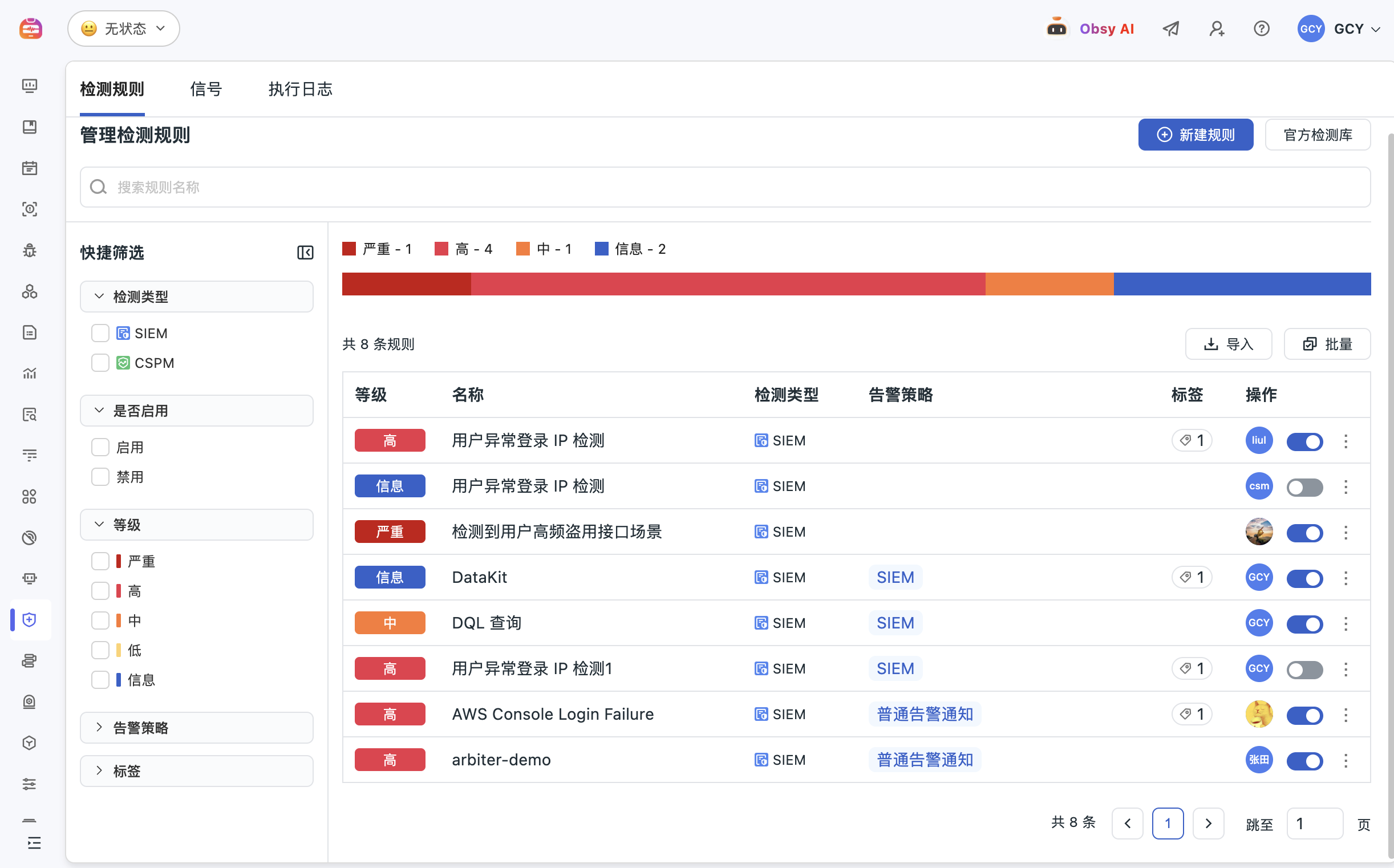
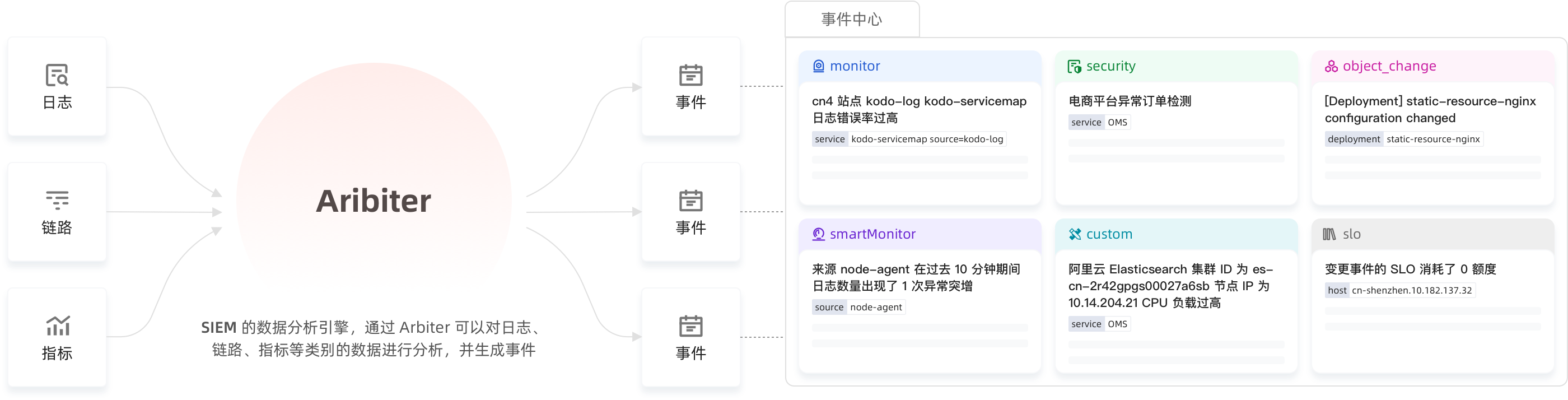
SIEM is Security Information and Event Management, used to centrally collect and analyze logs, audit events, alerts, and security rules, helping teams identify abnormal behaviors, assess risk impacts, and advance responses. Guance SIEM associates security incidents with hosts, cloud resources, application logs, and alert contexts.
What security risks can SIEM detect?
Common scenarios include abnormal logins, brute-force attacks, cross-account access, permission changes, configuration changes, malicious requests, abnormal file uploads, unauthorized access to internal data, abnormal cloud resource operations, and container runtime risks.
Guance What is the difference between SIEM and log monitoring?
Log monitoring focuses on log collection, retrieval, parsing, alerting, and troubleshooting; SIEM further integrates detection rules, security incidents, alarm responses, and audit context on top of logs to help teams move from "checking logs" to "identifying threats and closing the loop."
Which teams is SIEM suitable for?
SIEM is suitable for security operations, operations, SRE, platform engineering, and compliance teams, especially for enterprises looking to unify security logs, cloud resource audits, application access, and incident response into a single platform.