

Unified Catalog

Map every service, asset, owner, and dependency in one catalog

Guance Unified Catalog models services, hosts, databases, queues, cloud resources, and custom business entities in one asset system. Ownership, links, dependencies, and hierarchy give engineers and AI agents the same operational context.

Map every service, asset, owner, and dependency in one catalog
Unified sources
Combine APM discovery, DataKit reporting, cloud collection, and YAML declarations.
Unified entities
Model system, service, host, database, and queue entities, with custom extensions.
Unified context
Explain what an entity is, who owns it, what it depends on, and where to investigate.
Unified entry point
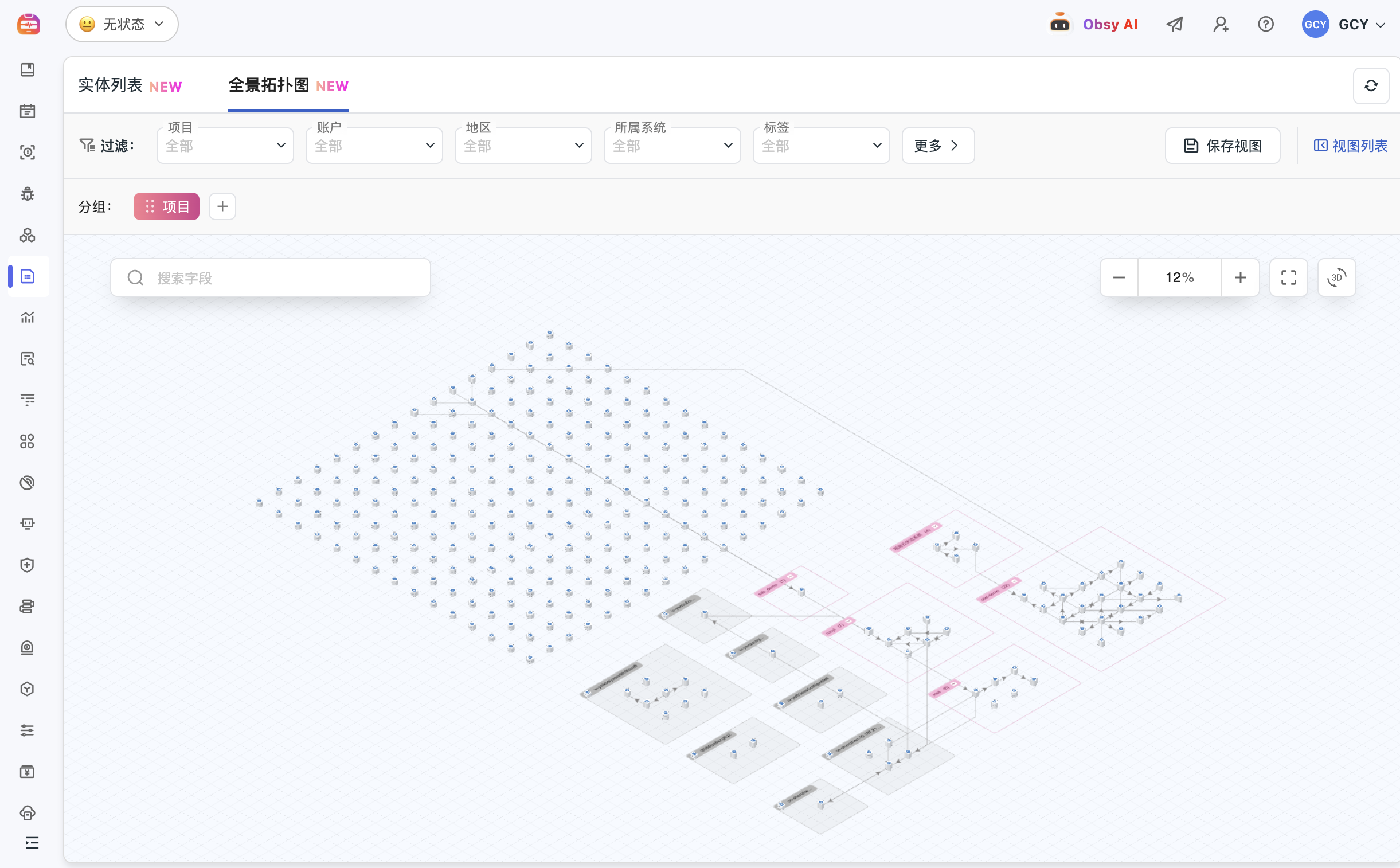
Use Infrastructure as the starting point for understanding the complete asset estate.
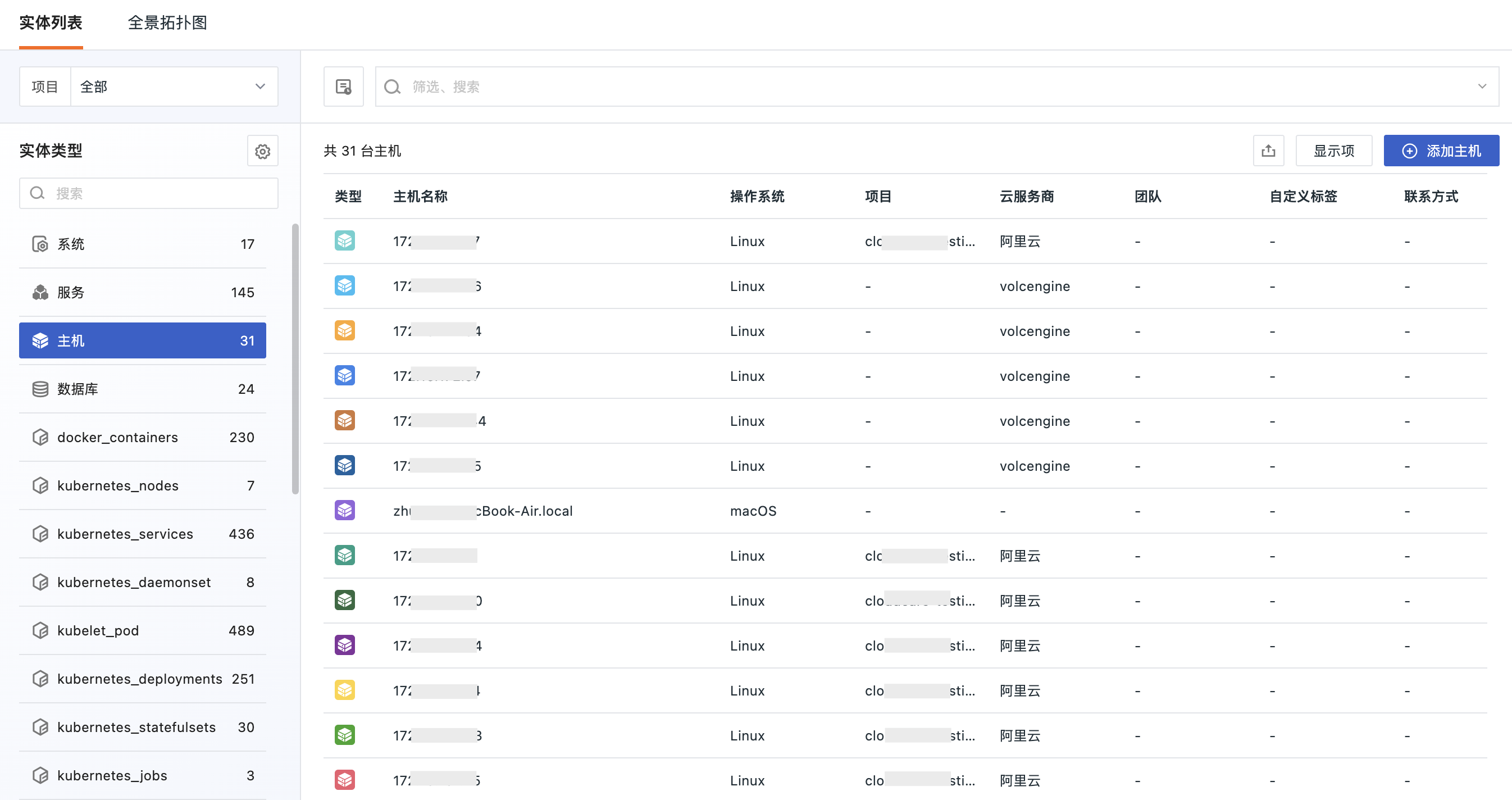
Combine automatic discovery, collection, and declared entities in one catalog
Unified Catalog accepts APM discovery, DataKit reporting, cloud-asset collection, and YAML declarations. Services, hosts, databases, queues, and cloud resources can be reviewed through one asset model instead of remaining isolated in source-specific inventories.
View documentation
Combine automatic discovery, collection, and declared entities in one catalog
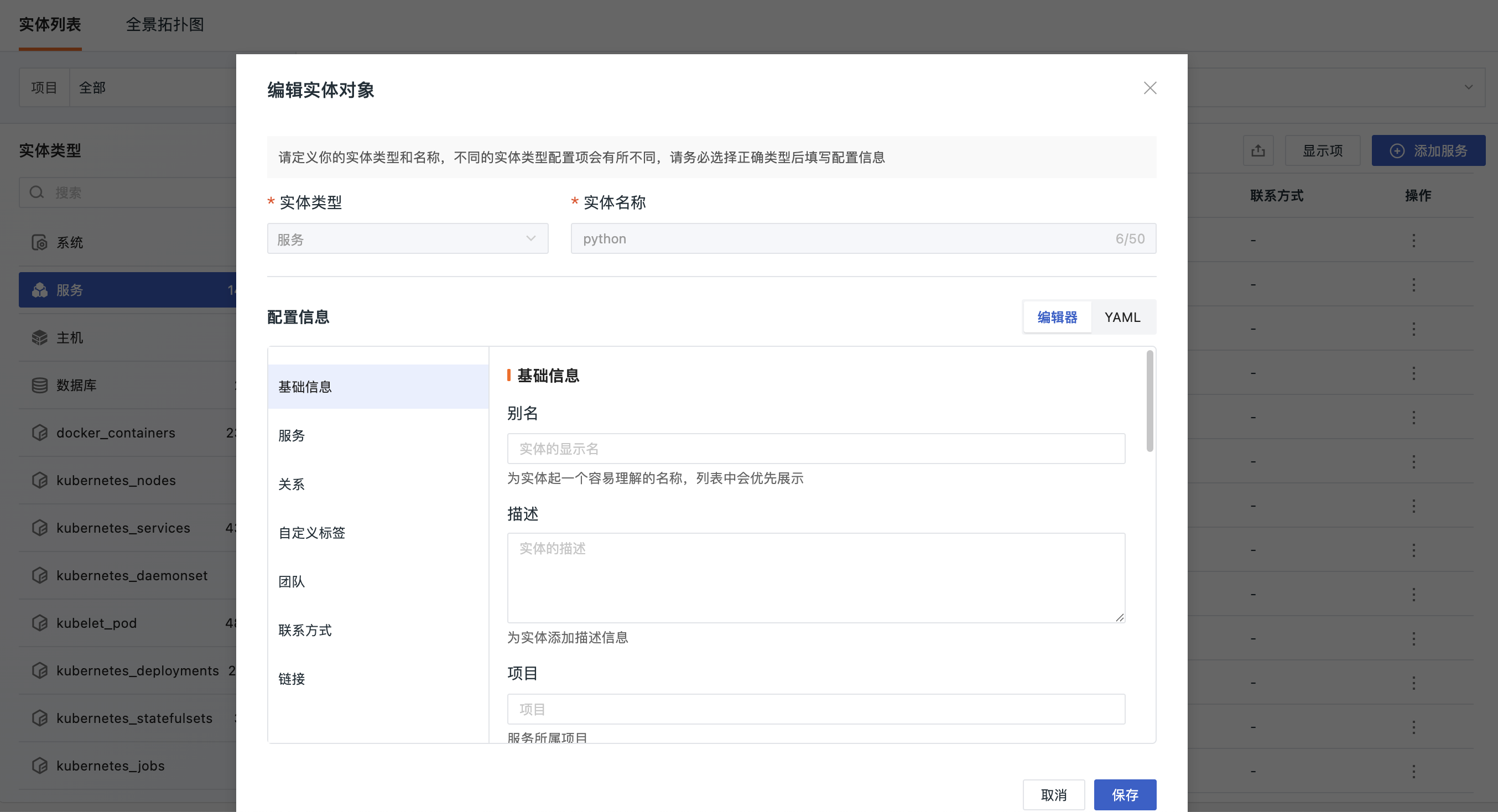
Use entity schemas for services, hosts, databases, queues, and business objects
Built-in system, service, host, database, and queue schemas provide a stable foundation, while custom entity types capture the objects unique to your organization.

Clear definitions reduce ambiguity for engineers and give AI agents a dependable structure for retrieval, analysis, and controlled action.
View documentation
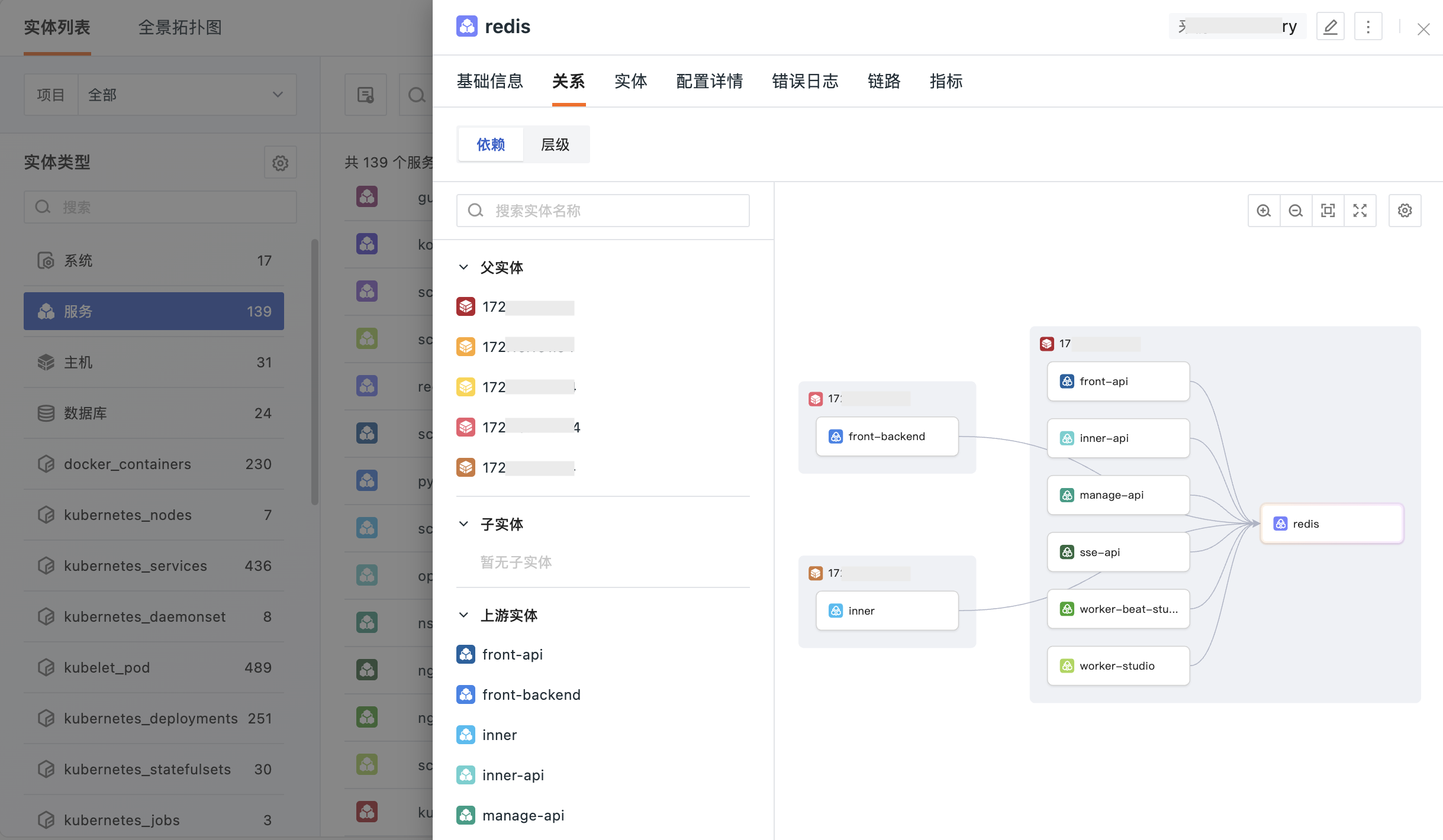
Inspect ownership, contacts, links, dependencies, and hierarchy from the entity
Entity lists expose schema-driven fields, tags, teams, contact details, and related links. In the detail view, dependency and hierarchy modes help teams search upstream, downstream, parent, and child relationships, then expand the topology around the selected entity.
View documentation
Inspect ownership, contacts, links, dependencies, and hierarchy from the entity
Normalize multi-cloud resources without discarding provider-specific detail
A shared cloud-resource schema can standardize identifiers, names, providers, regions, and entity types across AWS, Alibaba Cloud, and other sources.

Provider-specific attributes can remain in extension metadata until a dedicated schema is ready, so teams gain a usable inventory now without losing future modeling flexibility.
View documentation

Frequently asked questions

What is Guance Unified Catalog?

Unified Catalog is an asset and service catalog that models services, hosts, databases, queues, cloud resources, owners, links, dependencies, hierarchy, and custom business entities in a shared operational context.

Which teams benefit from Unified Catalog?

It is designed for development, SRE, operations, platform engineering, and business-technology teams that need a consistent inventory and ownership model across complex systems.

How does Unified Catalog connect to observability data?

Shared tags, entity relationships, contextual links, and DQL queries connect catalog entities with metrics, logs, traces, RUM, alerts, and infrastructure views.

Connect the catalog to infrastructure, cloud, and service evidence

Explore cloud monitoring, infrastructure, containers, documentation, and pricing.

Get started > View documentation > View pricing >

Unified Catalog is a shared semantic layer for people and AI, not just another inventory.