Synthetic Monitoring

Verify API, website, DNS, certificate, and network availability before users report a failure

Guance Synthetic Monitoring runs scheduled HTTP, TCP, ICMP, WebSocket, DNS, and SSL checks from selected locations. Compare regional failures, inspect response stages, and route incidents with the evidence needed to distinguish an endpoint, DNS, certificate, or network issue.

Verify API, website, DNS, certificate, and network availability before users report a failure

What Synthetic Monitoring helps you solve

Continuously verify whether users can reach a critical service

Internal metrics can look healthy while a region, ISP, DNS resolver, certificate, or network path is failing. Controlled checks provide repeatable outside-in evidence before user reports become the first alert.

Can users really reach the service? Test it continuously from outside
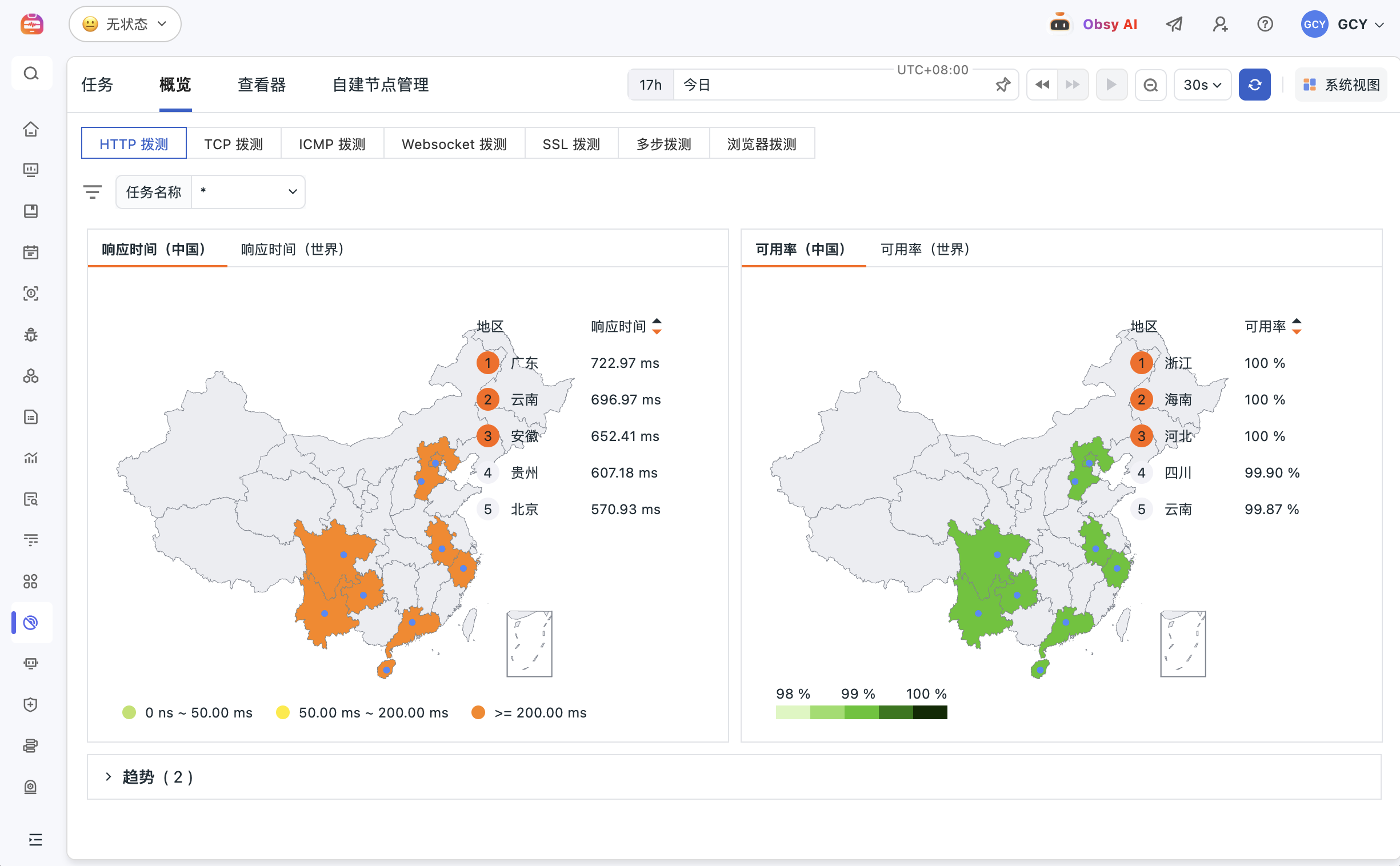
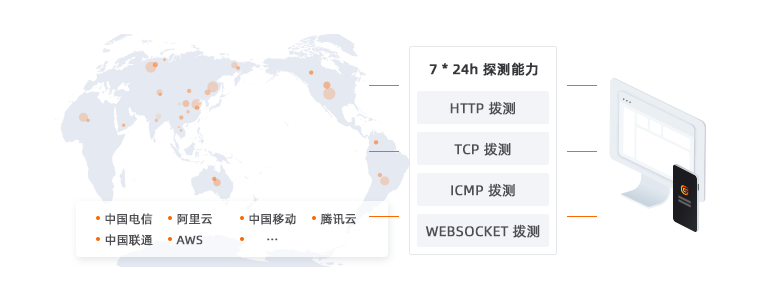
Create scheduled HTTP, TCP, ICMP, WebSocket, DNS, and SSL checks for websites, domains, APIs, ports, and network services. Track availability, response time, and failures from selected test locations.
View documentation
Can users really reach the service? Test it continuously from outside
One region is failing. Separate a local network issue from a system-wide outage
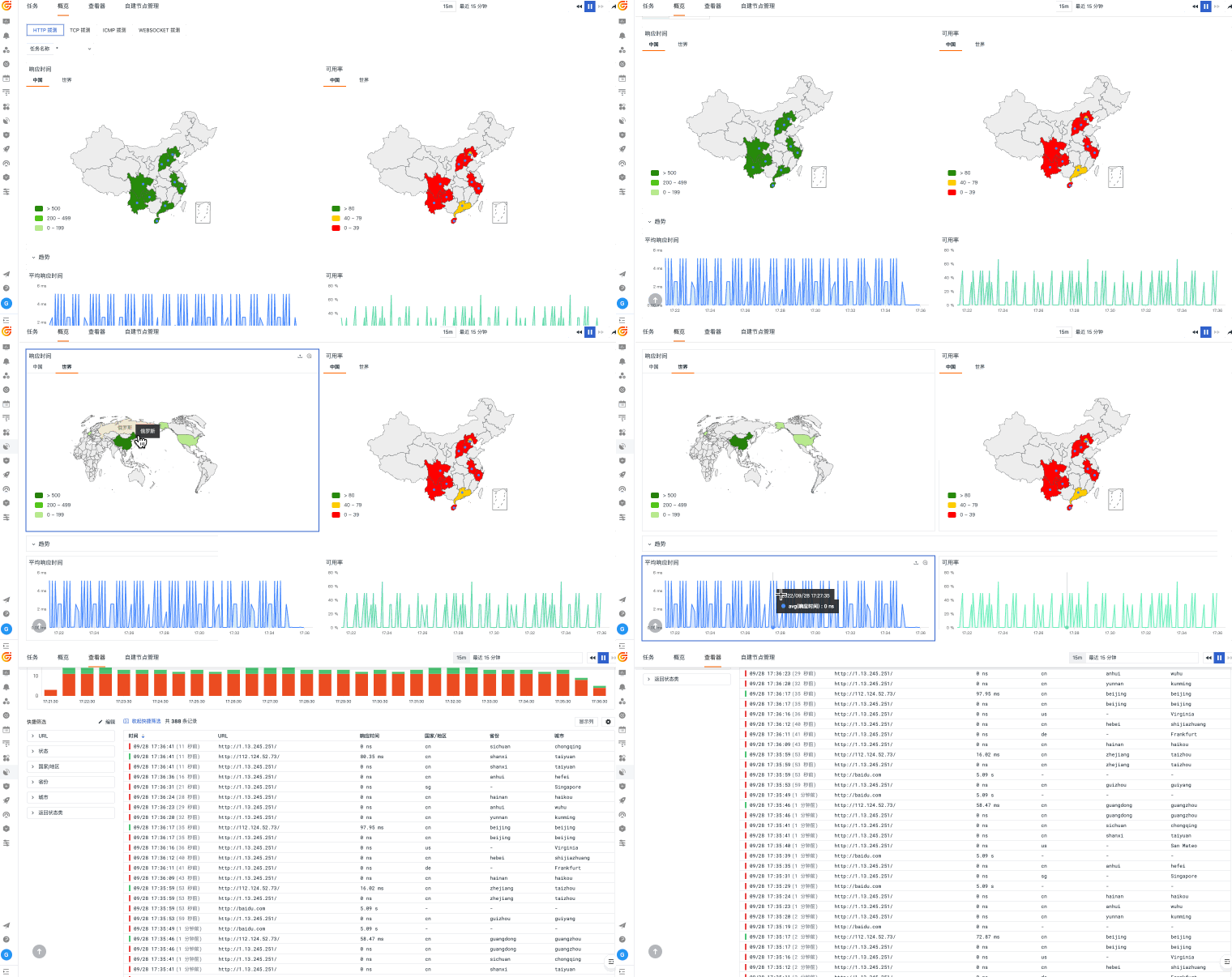
Compare results by test location and network path to identify regional, ISP, DNS, certificate, or endpoint-specific failures. Repeatable checks make it easier to confirm whether the issue is isolated or widespread.
View documentation
Go beyond “unavailable” with timing and protocol evidence
Inspect DNS lookup, connection, TLS, time to first byte, response status, content assertions, and timeout details. Use the failed stage to route the incident to the team that can act on it.
View documentation
Go beyond “unavailable” with timing and protocol evidence
Bring availability failures into the same incident and service context
Create alerts and events from failed checks, then connect them to application services, infrastructure, logs, and real user experience. Recovery checks provide a direct way to verify that access is restored.
View documentation

Frequently asked questions

What is Synthetic Monitoring?

Synthetic Monitoring runs controlled checks against websites, APIs, DNS, certificates, ports, and network services on a schedule. It verifies availability and performance even when there is little or no real user traffic.

Which protocols can Guance monitor?

Guance supports checks for HTTP, TCP, ICMP, WebSocket, DNS, and SSL scenarios. Available assertions and timing details depend on the selected check type.

Can checks run from different regions?

Yes. Select available test locations to compare reachability and latency across regions and identify location-specific failures.

How does Synthetic Monitoring work with RUM?

Synthetic Monitoring provides controlled and repeatable checks. RUM shows what real users experienced on their devices and networks. Together they distinguish expected service availability from actual user impact.

Can failed checks be connected to application and infrastructure data?

Yes. Failed checks can create events and alerts that teams investigate alongside services, traces, logs, infrastructure, and user experience data.


Explore more

Resources and further reading

Choose the next step from product documentation, related solutions, and technical guidance.

Related reading

Product guides, troubleshooting workflows, and technical best practices

Continue exploring availability and digital experience

Connect controlled availability checks to RUM, APM, platform, documentation, and pricing resources.

Get started > View documentation > View pricing >