Frequently asked questions
What is API availability monitoring?
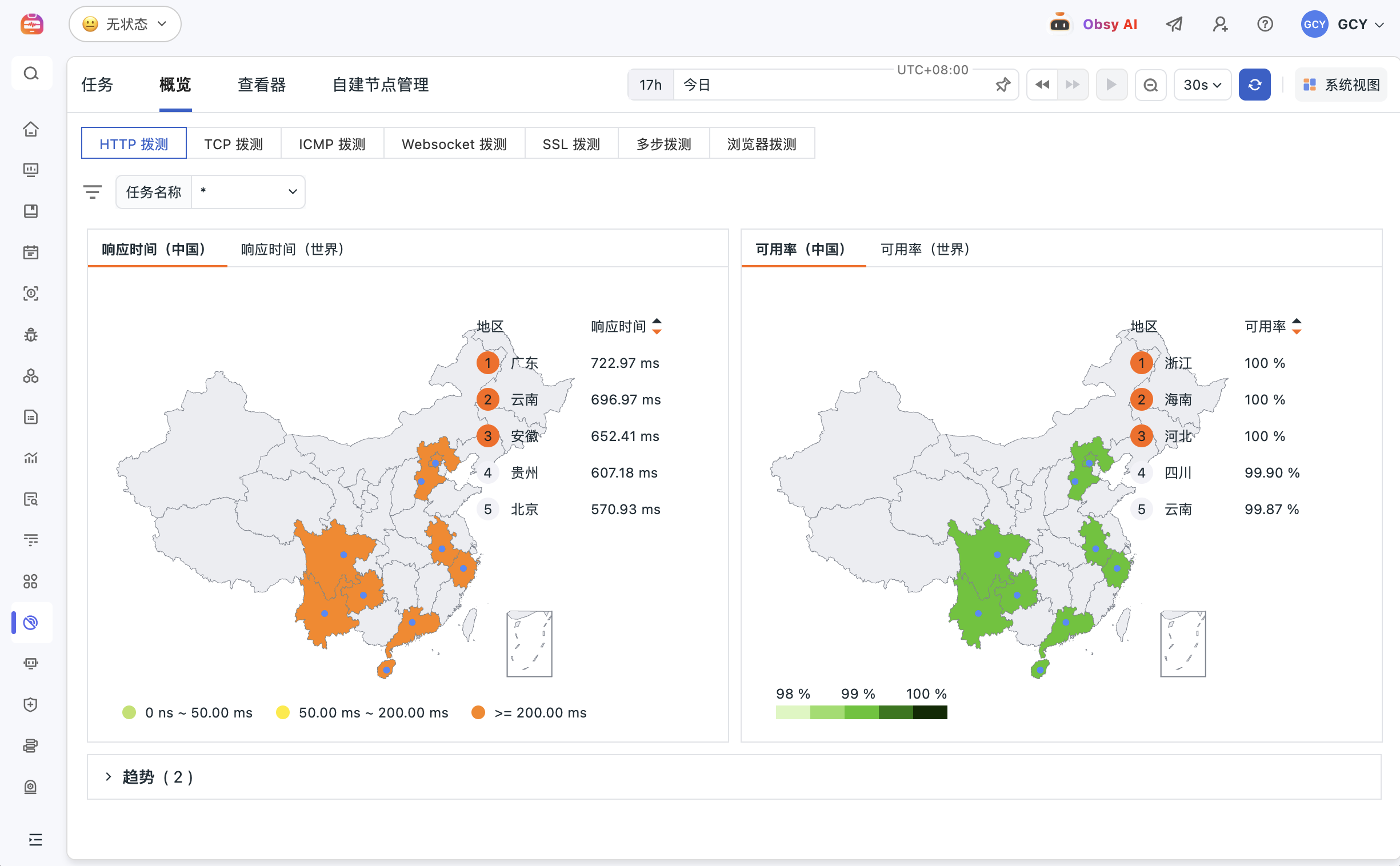
API availability monitoring verifies service reach, response normal, and access performance by periodically detecting external nodes to websites, API interfaces, domain names, or ports. It is commonly referred to as dial detection, synthetic monitoring, or network dial detection.
What do API availability checks and API availability detection usually check?
API availability checks typically continuously check whether interfaces are reachable, whether response codes are correct, whether DNS and SSL are normal, whether response times are overdue, and whether there are network quality differences when accessing the same interface from different regions or operators.
Which protocols does API availability monitoring support?
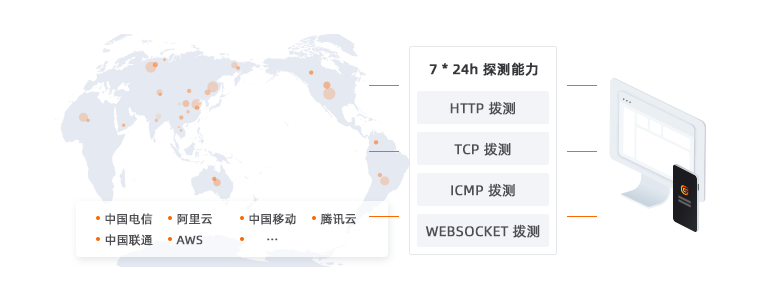
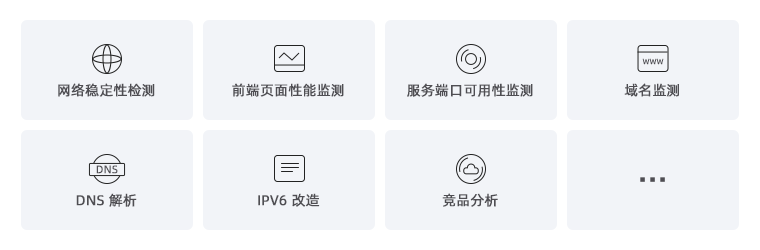
Guance API availability monitoring supports common protocols such as HTTP, TCP, ICMP, WebSocket, DNS, and SSL, suitable for websites, APIs, service ports, domain name resolution, and network quality verification.
What is the difference between API availability monitoring and RUM?
API availability monitoring is proactive auditing used to continuously verify external service accessibility; RUM is Real User Experience Monitoring, used to analyze page performance, errors, and behavior paths during real visits. The combination of both can simultaneously cover active validation and real-world experiences.
How does API availability monitoring help with fault response?
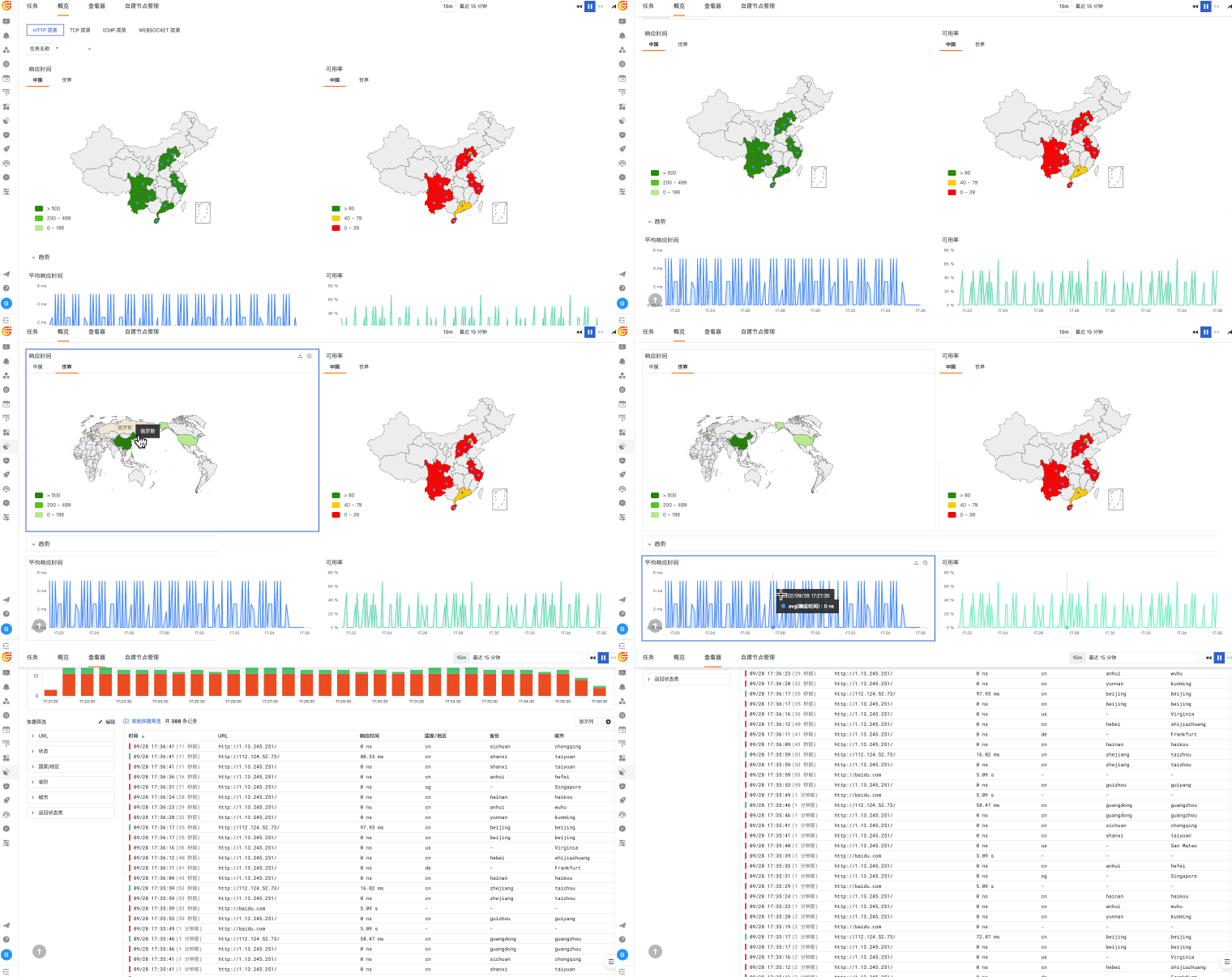
When dialing fails or responses slow down, Guance can record the cause of failure, location, and operator information, triggering alerts or events to help teams quickly assess the impact and locate DNS, SSL, network, or server issues.