Frequently asked questions
What types of databases does Guance database monitoring support?
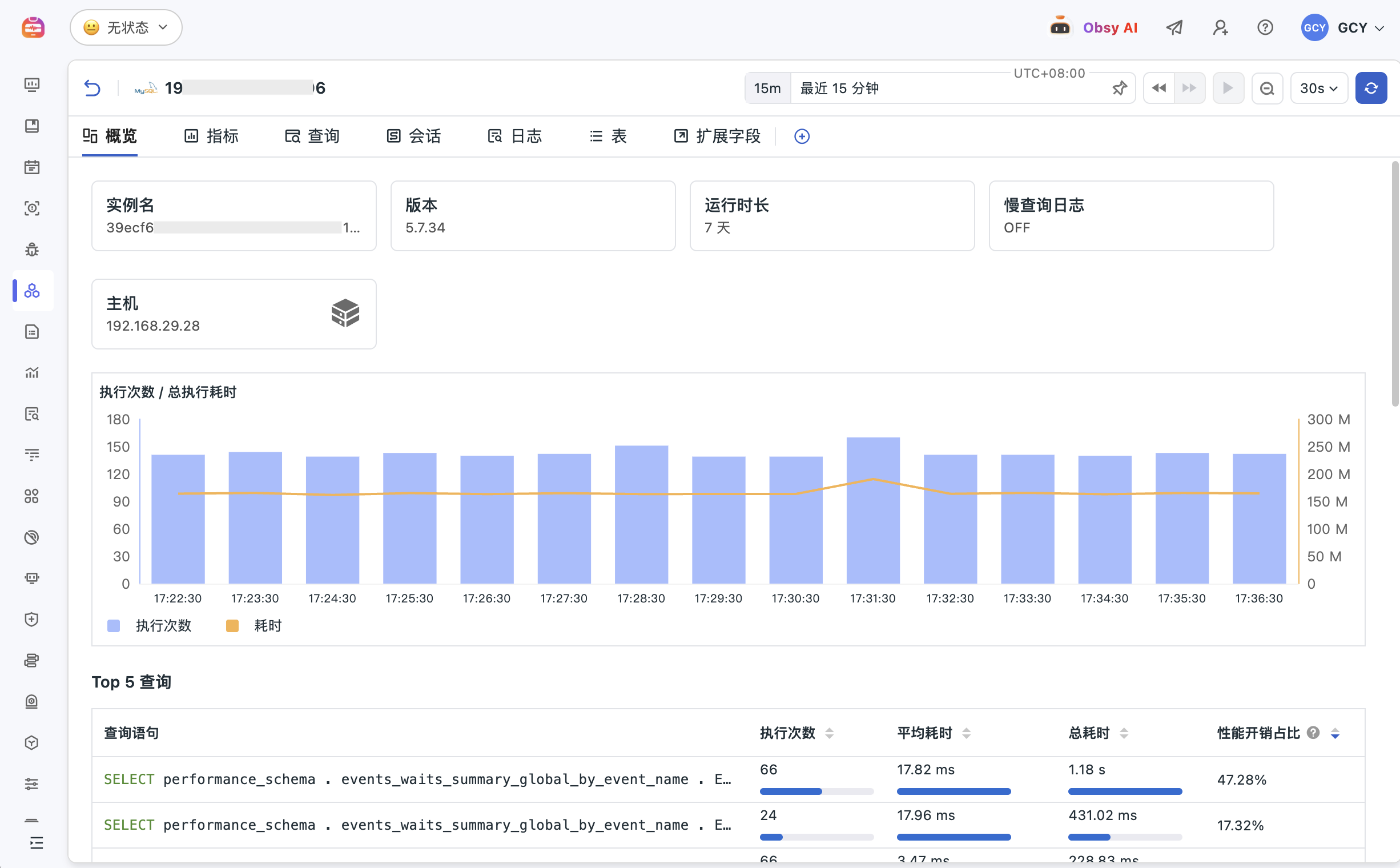
The database viewer targets database data collected by DataKit. The documentation covers common database types such as MySQL, SQL Server, PostgreSQL, Oracle, MongoDB, and quickly distinguishes instances in the list using type icons.
Can database monitoring help locate slow queries?
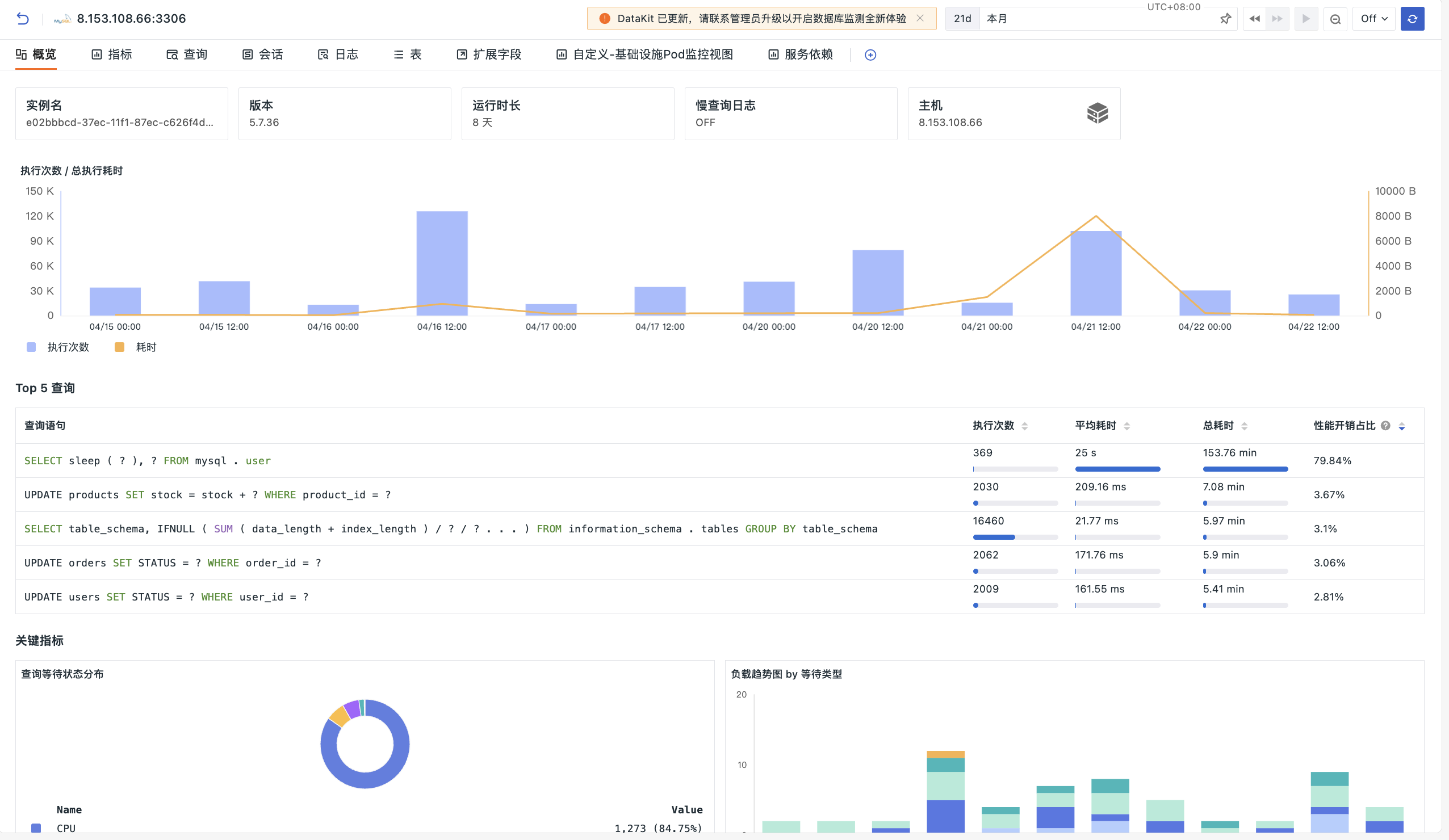
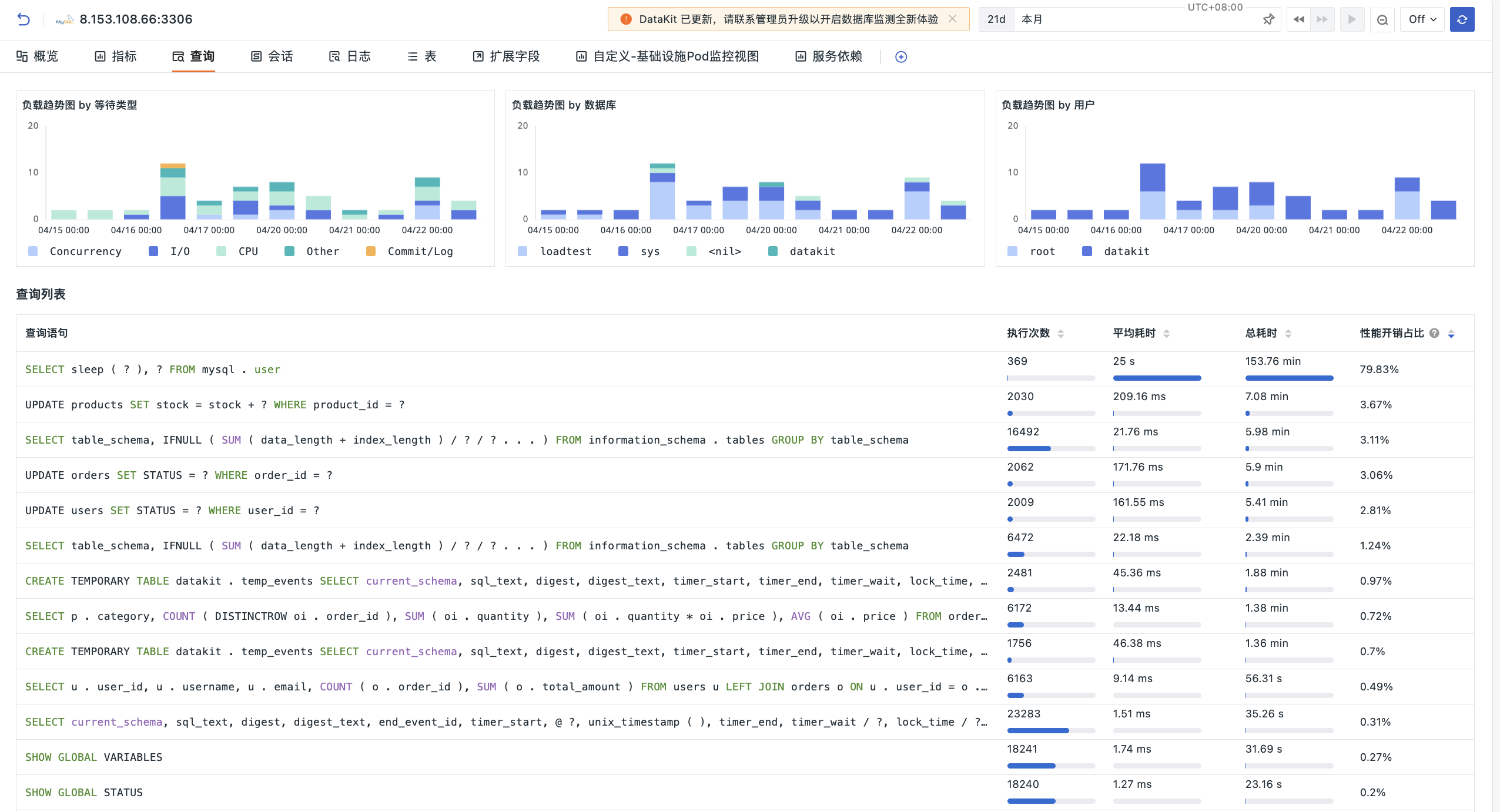
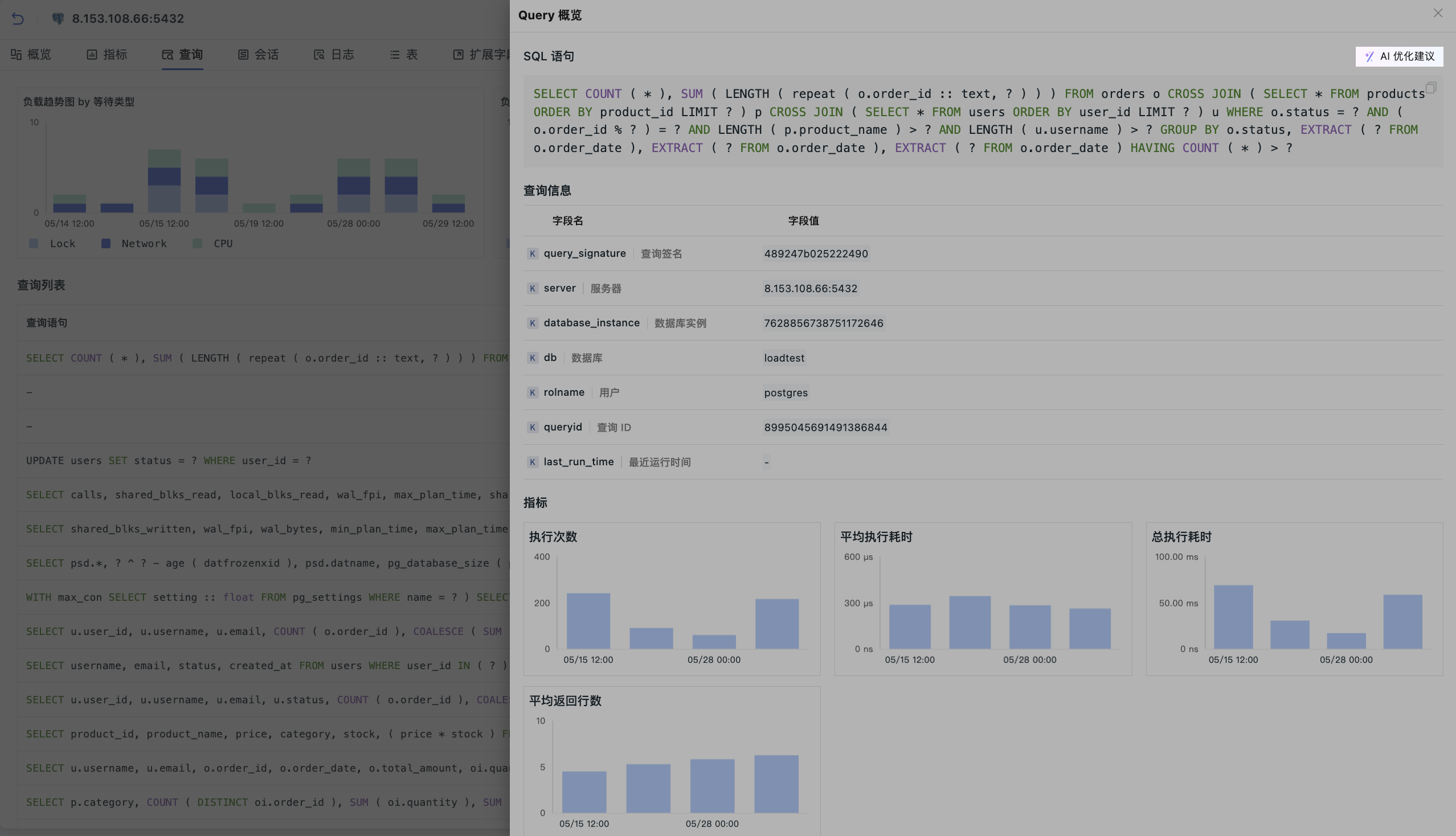
Yes, you can. Guance displays SQL execution count, average time, total time, and performance overhead ratio, and supports drilling down from query lists to query overviews, sampling records, and complete log data, helping to locate slow queries and high-cost SQL.
How can you troubleshoot database lock waiting and blocking issues?
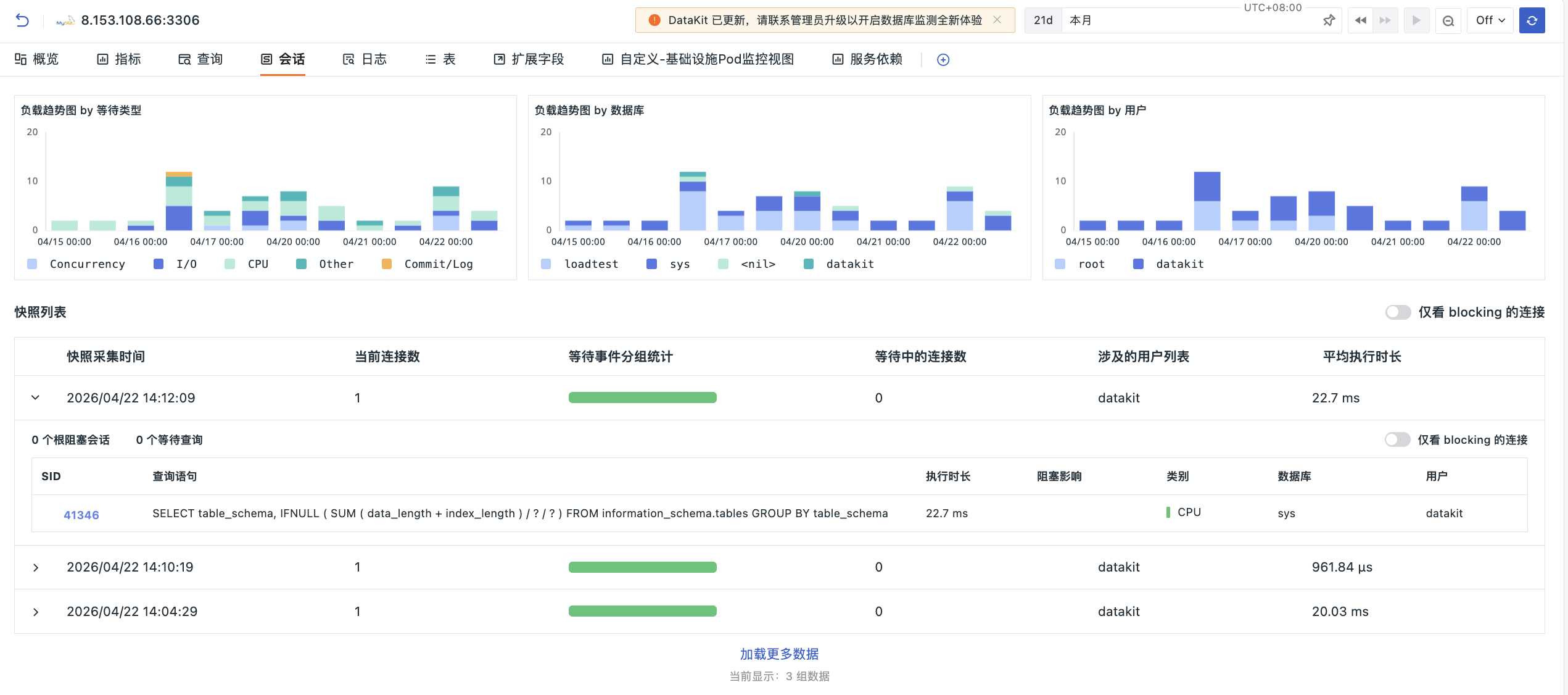
You can enter the session view to view the number of active sessions, distribution of waiting events, number of connections in waiting, number of root blocking sessions, and number of waiting queries, and filter sessions with blocking activity using the "Blocking Only Connections" feature.
Can database monitoring be analyzed together with host resources and logs?
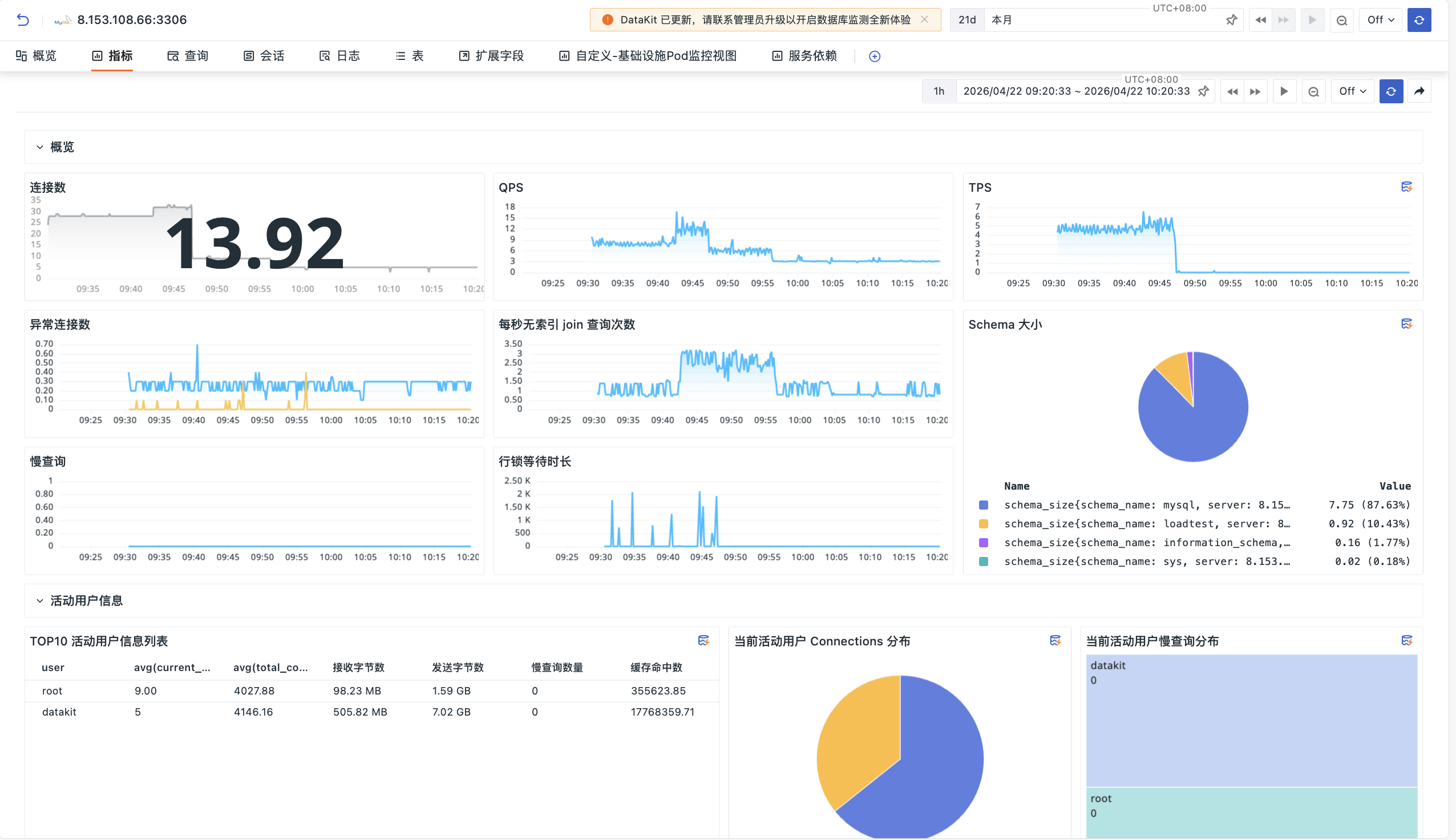
Yes, you can. On the database detail page, you can view core metrics, node CPU/disk/network/memory trends, slow query logs, error logs, table structures, and extension fields, making it suitable for checking databases, hosts, and log evidence in the same context.
What can Obsy AI do in database monitoring?
In the query view, users can summon Obsy AI optimization suggestions from the SQL statement area, allowing AI to perform optimization analysis based on the current query and relevant context, assisting in providing directions for SQL rewriting, indexing, or object adjustments.