Log Management

Control log cost, access, retention, and quality across the full data lifecycle

Guance Log Management combines indexing and retention policies, archive strategy, role-based access, masking, Pipeline processing, filtering, forwarding, and audit trails so high-volume logs remain useful, controlled, and cost-aware.

Control log cost, access, retention, and quality across the full data lifecycle

What Log Management helps you solve

Keep high-volume logs searchable, controlled, and economically sustainable

Guance gives platform, operations, security, and compliance teams policy controls for what to collect, how to structure it, who can access it, how long to retain it, and where it should be forwarded or archived.

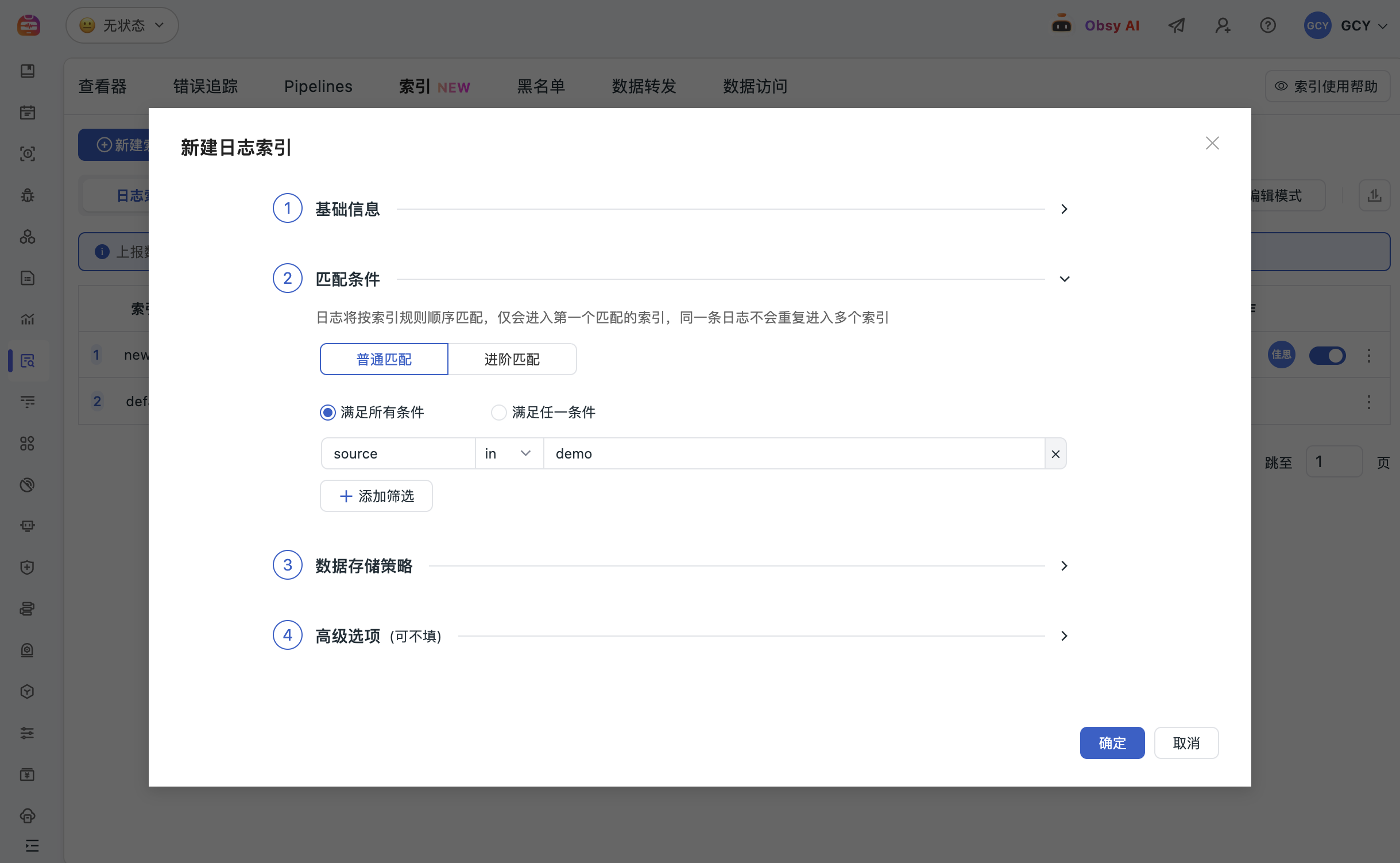
Log volume keeps growing. Use indexing and retention to control cost
Separate high-value operational data from low-frequency historical data. Define index, retention, archive, and storage policies according to search demand, compliance needs, and business value instead of retaining every source in the same tier.
View documentation
Log volume keeps growing. Use indexing and retention to control cost
Not every user should see every record. Govern access and sensitive fields
Use role-based access and data permissions to limit who can search specific logs. Apply masking and field controls so credentials, personal data, and regulated values are protected during everyday investigation.
View documentation
Inconsistent formats undermine analysis. Standardise logs with Pipeline
Parse and normalise timestamps, services, environments, severity, business identifiers, and custom fields as data enters the platform. Reusable processing rules improve search quality and downstream governance.
View documentation
Inconsistent formats undermine analysis. Standardise logs with Pipeline
Low-value data consumes high-value storage. Filter noise before it accumulates
Exclude repetitive, irrelevant, or known-noise records with controlled filtering rules. Preserve the signals needed for troubleshooting and audit while reducing unnecessary processing and retention.
View documentation
Logs may serve external systems. Make forwarding and audit traceable
Forward selected data to approved destinations with explicit rules and operational visibility. Keep processing and delivery behavior reviewable so integrations do not become invisible data paths.
View documentation
Logs may serve external systems. Make forwarding and audit traceable

Frequently asked questions

What is the difference between log management and log monitoring?

Log management governs collection, processing, access, masking, indexing, retention, archives, forwarding, and cost. Log monitoring uses the resulting data for search, analysis, correlation, alerting, and troubleshooting.

How can log management reduce cost?

Classify logs by operational value, avoid indexing unnecessary records, set appropriate retention periods, filter known noise, archive data that rarely needs immediate search, and review high-volume sources regularly.

How does Guance protect sensitive log data?

Teams can combine access controls, workspace and data permissions, field masking, processing rules, and audit practices. The exact design should reflect internal security and regulatory requirements.

What role does Pipeline play in log management?

Pipeline parses, transforms, enriches, filters, and standardises incoming data. It turns inconsistent raw messages into governed fields that are easier to search, secure, route, and retain.


Continue exploring log operations

Connect log management to log monitoring, Pipeline processing, and ELK migration guidance.

Get started > View documentation > View pricing >