GuanceDB / Observability Data Engine

GuanceDB3.1

面向 AI 时代的可观测数据基础设施

Pain points

Surveillance scenarios are changing, but the underlying systems are still stuck in the past

As business evolves, the data accessed by the observable platform is no longer limited to basic monitoring metrics, but also includes application logs, links, user experience, and business data. As data scale, query concurrency, and retention cycles continue to grow, traditional architectures tightly coupled with computing and storage tend to encounter bottlenecks in scaling efficiency and resource utilization.
仪表盘、监控器和日常排障中存在大量重复查询。GuanceDB 3.1 通过专用引擎与流式聚合识别适合加速的查询模式,减少高频查询重复扫描原始数据的开销,并根据实际负载调度查询资源。

Upgrade

传统 MPP 架构 vs GuanceDB 3.1

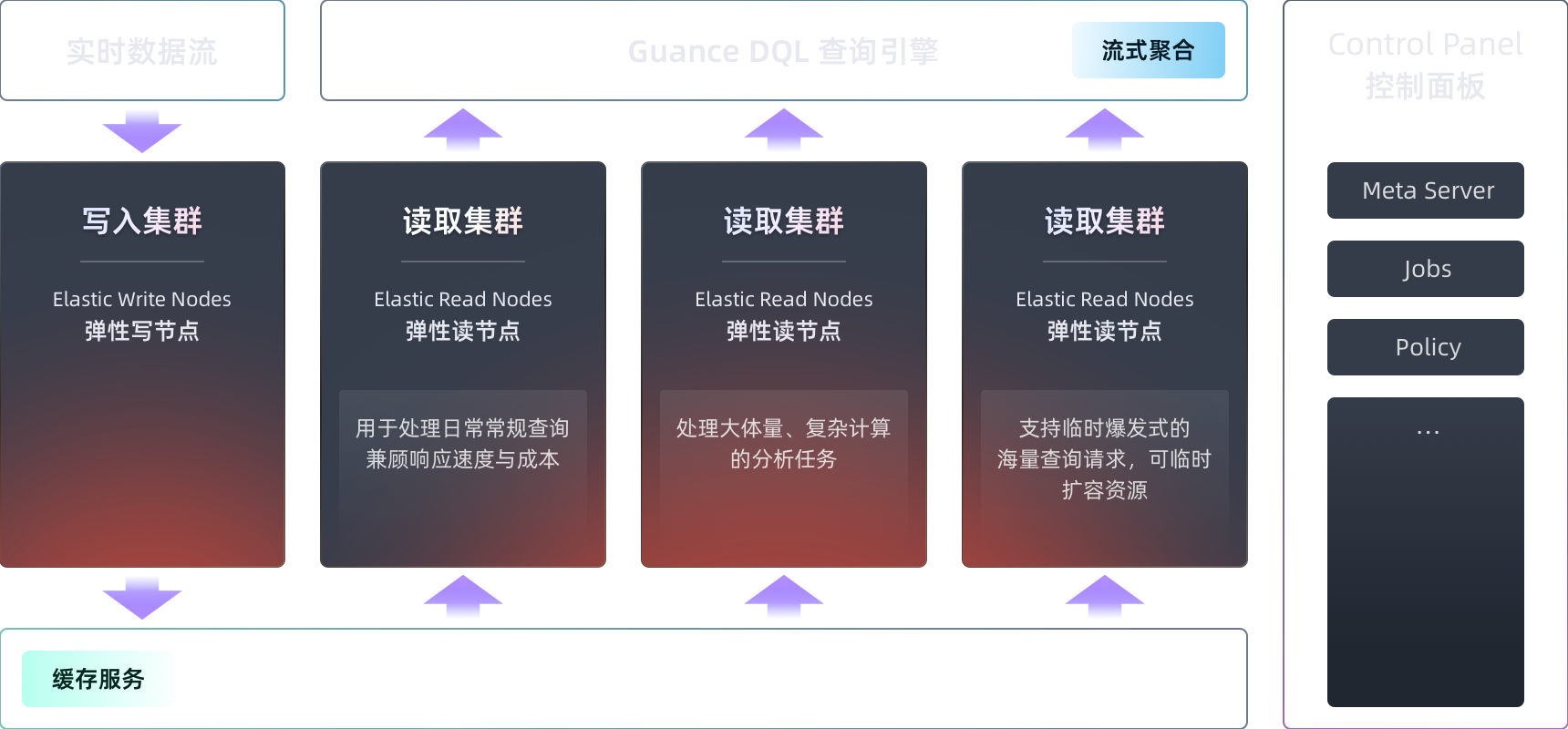
这是传统 MPP 架构与 GuanceDB 3.1 架构的对比示意,重点说明存储与计算解耦后,查询资源如何根据业务负载独立调度,在性能、成本和资源隔离之间提供更灵活的选择。

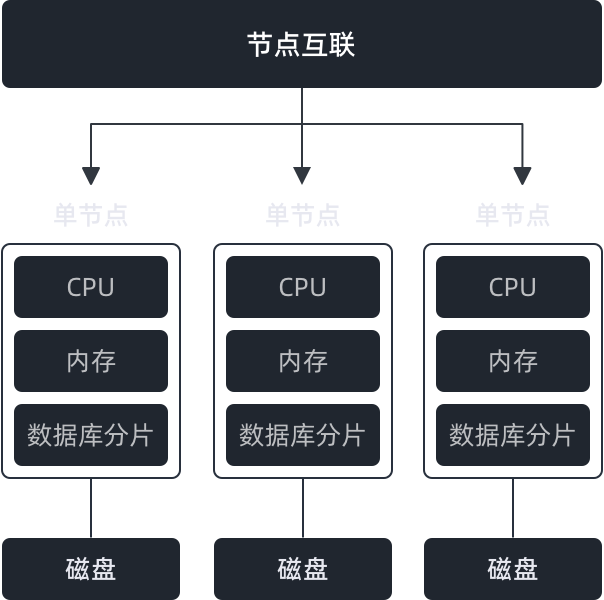
Traditional MPP architecture

Computing and storage are tightly coupled, with limited scalability. Computing resources are difficult to adjust dynamically, overall utilization is low, and expansion costs are high.

Traditional MPP architecture

A fully separated storage engine for the AI era

It adopts integrated data lakehouse design and separation of storage-compute, allowing data storage and query computation to expand independently. The system leverages the elasticity of cloud infrastructure to adjust query resources according to business load and optimize resource costs according to different computing power types. For example, computing resources are expanded during weekday peak queries, and idle computing power is reduced during nights and weekends. Actual capacity, query concurrency, and elasticity range are subject to deployment specifications and service quotas.

GuanceDB 3.1 完全存算分离架构

Tailored to the needs of different enterprises

通过双引擎、智能调度、多租户优化与弹性算力供给等设计,GuanceDB 3.1 实现了可观测数据处理架构在性能、成本、灵活性上的持续进化,助力企业高效构建更具性价比的数据基础设施。

The system has built multi-level resource scheduling strategies based on different enterprise usage scenarios:

01. High cost-performance users

Priority is given to the use of shared computing pools, and idle computing power in the system can be flexibly called during peak periods to maximize resource reuse

02. Performance-sensitive users

Configure independent query computing clusters to ensure stable and fast response capabilities in any scenario

03. Small and medium-sized teams

Unified access to the shared pool, the system uses concurrency control mechanisms to ensure the query experience while keeping costs controllable

04. Users who prioritize storage

By adopting independent processing paths, computing resources are stripped, further reducing system load and cost

3.1 升级

双引擎分流,让每类数据走最合适的路径

Metric Engine 面向高基数时间序列,Event Engine 面向日志、链路、RUM、安全事件与 AI Agent Events。GuanceDB 3.1 在写入阶段按数据模型分流,再通过 DQL 与 Query Router 提供统一查询入口。

GuanceDB 3.1 Metric Engine 与 Event Engine 双引擎分流架构

指标专用引擎

针对时间窗口、长期趋势与高基数指标优化存储和查询路径

事件专用引擎

统一承载 Logs、Traces、RUM、Events 与 AI Agent Events

统一查询入口

DQL 与查询路由按场景调度计算资源,上层使用方式保持一致

3.1 升级

自研倒排索引,让全文查询从扫描变成定位

Event Engine 在日志写入阶段建立词项到记录的映射。查询先从索引定位命中的记录,再读取相关数据,避免反复扫描全部原文,降低全文检索的计算与存储放大。

GuanceDB 3.1 自研倒排索引从日志写入到全文查询的过程

写入时建立索引

词项与记录位置随数据写入建立映射,不等待查询时再扫描

全文查询先定位

先从索引找到命中范围,再读取需要的数据,减少无关计算

融入 Event Engine

与条件过滤、字段检索和 DQL 查询共享统一的数据与计算路径

加速

流式聚合加速引擎

When writing data, it automatically builds queries that need acceleration based on users' historical queries, and preaggregates data in minimal time shards. When the query finds that relevant data already has pre-aggregated results within the current time frame, it directly retrieves data from streaming aggregation rather than the original data.

Learn more
GuanceDB 3.1 流式聚合加速引擎

Transparent acceleration

For indicators and log queries suitable for pre-aggregation, the business side does not need to rewrite existing dashboards and monitors; the system automatically reuses aggregated results

Any data time

Aggregate data based on the time marked by the data itself, and combine write and update mechanisms to handle delayed data reporting

Lower resource usage

Transfers high-frequency queries suitable for pre-aggregation to stream aggregation result responses, reducing the burden of repeated raw data scanning and database query pressure

GuanceDB 3.1 的优势

Supports a wide range of business scenarios

Different read clusters can be provided for different business scenarios, using different configuration schemes (high concurrency, offline tasks, etc.) and isolating each separately

Real-time queries

Batch reports

Business analysis

Data Mining

GuanceDB 2.0 continues to serve

GuanceDB 2.0 The privatized version will continue to be served

FAQ

Frequently asked questions

GuanceDB 3.1 主要解决什么问题?

GuanceDB 3.1 解决海量多模态观测数据的写入、长期留存、统一查询和高频聚合问题,让 Metrics、Logs、Traces、RUM、Events 与 AI Agent Events 不必分别依赖孤立的数据系统。

Metric Engine 与 Event Engine 有什么区别?

Metric Engine 面向高基数时间序列,重点处理压缩、降采样、长期趋势和 PromQL 查询;Event Engine 面向日志、链路、RUM、安全事件和 AI Agent Events,重点处理 Schemaless 明细数据、条件过滤与全文检索。两类数据仍通过统一写入和 DQL 查询入口使用。

自研倒排索引如何改善日志全文查询?

Event Engine 在写入阶段建立词项到记录的映射。查询时先从索引定位命中的记录,再读取相关数据,避免每次全文查询都扫描全部日志原文,从而减少无关计算和存储放大。

Why does GuanceDB use storage-compute separation?

Storage-compute separation allows storage and query resources to scale independently. Teams can adjust compute resources based on query peaks, long-term retention, and cost requirements without having to bind all data and compute into the same cluster.

GuanceDB 3.1 如何服务 AI Agent?

GuanceDB 通过 DQL、PromQL 兼容接口和可编程 Pipeline,把多模态观测数据转化为可查询、可关联的事实层,为 Copilot、Agent Teams 和第三方智能体提供持续更新的生产上下文。