CUSTOMER STORY

Trace a slow medical-record request to its performance bottleneck

ABOUT THE PROJECT

About the customer

This Guangzhou Medical Cloud project serves an unnamed district hospital in Guangzhou. More than ten applications, including clinical workstations, imaging, registration, and payment systems, support hospital operations. The case focuses on electronic medical record (EMR) access and collaboration between the hospital IT department, project integrator, and software developer.

Healthcare IT Sector
10+ Applications in the project
Guangzhou, China Project location

The challenge

Medical records took nearly 10 seconds to open

Clinicians regularly reported slow record loading. Each request passed through multiple systems, so checking a single component could not explain the full delay.

The hospital, integrator, and software developer investigated repeatedly but lacked continuous evidence showing how a visit moved through the system.

Adding hardware did not resolve the actual bottleneck, and performance issues continued to affect clinicians and project acceptance.

KEY RESULTS

~10 sec

Record loading before optimization

2–3 sec

Record loading after optimization

Shared

Trace evidence across project teams

SOLUTION

Guangzhou Medical Cloud × Guance — Solution

01

Collect application and infrastructure evidence together

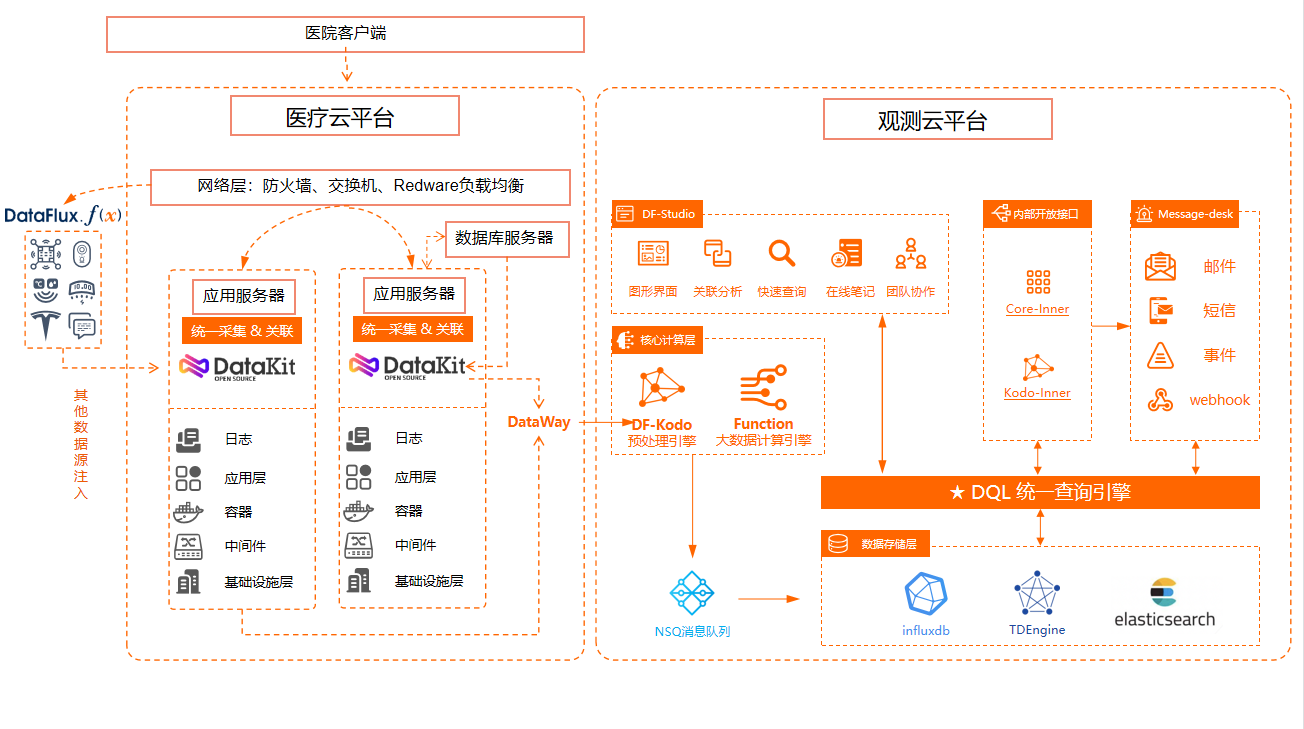
DataKit brings application performance, infrastructure metrics, processes, and relevant logs into a common context. Teams can examine request processing alongside the underlying runtime state.

4

Runtime data types: applications, infrastructure, processes, logs

Telemetry collection and correlation architecture for the medical cloud
02

Reconstruct the record-loading request

Connect terminal access context with application traces to examine where time is spent during EMR use. Hospital and developer teams can investigate the same request rather than infer the cause from symptoms alone.

1

Request trace reconstructing the record-loading path

03

Verify the optimization with runtime data

Using the observability evidence, the developer identified and optimized the EMR bottleneck. Record-loading time fell from nearly 10 seconds to 2–3 seconds in this scenario. Dashboards and alerts also provide performance evidence for releases and project acceptance.

2–3 sec

Record loading after optimization

BUSINESS IMPACT

Give hospital IT more time for service improvement

01

Reduce the wait for medical records

Loading improved in the documented EMR scenario, with fewer complaints about slow performance.

02

Investigate with common evidence

Hospital IT, the integrator, and the developer can discuss the same requests and performance signals.

03

Use performance data for releases and acceptance

Ongoing monitoring provides a reviewable record of system behavior for future changes and service assessment.

Give your business clear operational evidence

Connect user experience, application traces, and business telemetry with Guance.