
Phone:400-882-3320


 Guance
Customer context
Yingxiong Network is an interactive-entertainment company. Its published story describes a game-login traffic scenario where Kubernetes and HPA supplied elastic capacity and load tests validated service behaviour.
Elastic scaling required performance evidence
Adding container replicas does not always increase throughput linearly; the constraint may be compute, a shared dependency, or application code.

Load-test throughput reached a plateau after scaling
The published test showed limited additional throughput as Pods were added, which resource counts alone could not explain.

Implementation
Analyse the load test with APM, logs, and profiling
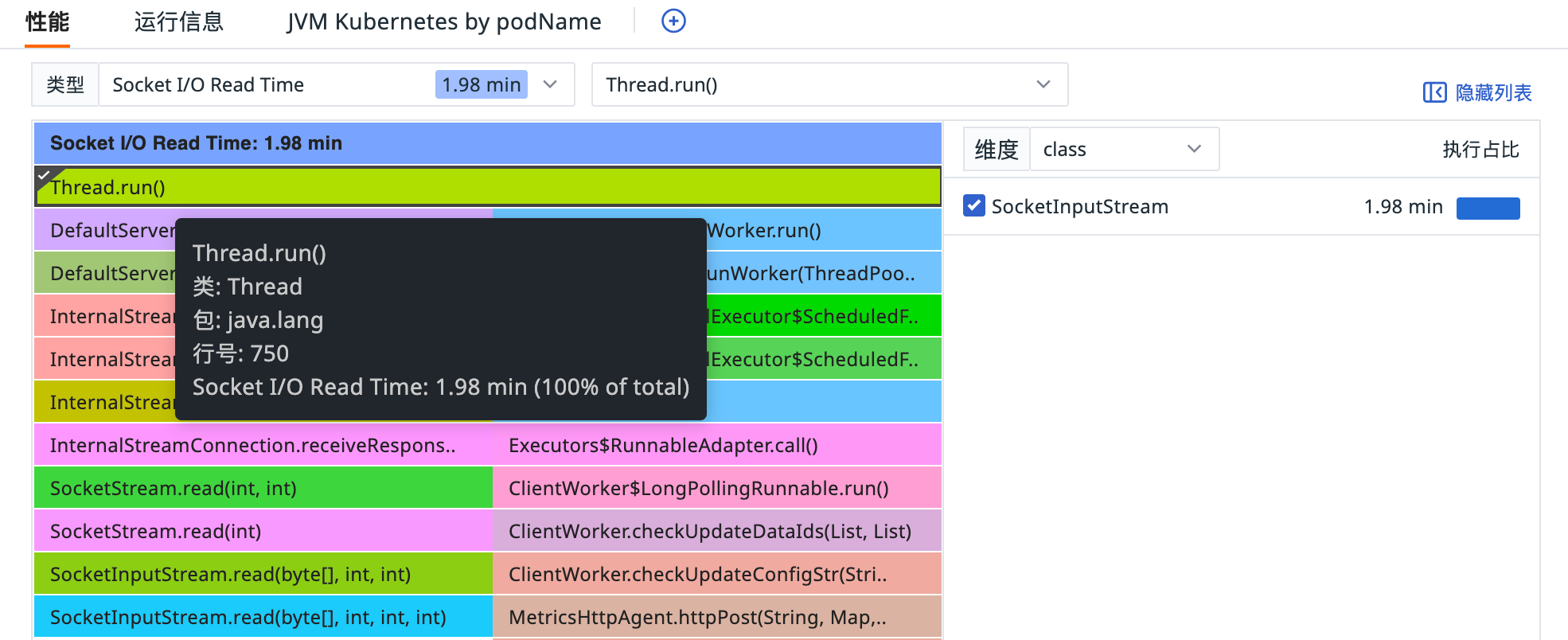
The team deployed DataKit in the container environment, ingested traces and logs, reviewed suspect services and Redis in APM, then used profiling signals including Lock Wait Time and Socket I/O Read Time to locate a code path making frequent Redis calls.
What changed
The code bottleneck gained reproducible evidence
Developers changed the implementation using trace, Redis, and profile evidence and repeated the load test with the same resources, validating improved throughput for that scenario; it is not a result guarantee for other workloads.