ComfortDelGro (CDG) Guance

Reuse existing DDTrace data in a full-stack workflow managed within the customer’s chosen deployment boundary

DDTrace migration path
Flexible deployment and data boundaries
Full-stack signal correlation

Customer context

ComfortDelGro (CDG) is a Singapore-headquartered transport company. Its published Guance story describes digital services that require investigation across applications, cloud resources, logs, and third-party monitoring data.

The story also states that CDG previously used Datadog and reassessed data onboarding, deployment location, and the migration path for existing trace data as the monitoring scope expanded.

Business-system coverage used separate entry points

Applications and functions followed different monitoring paths, making it hard to move continuously from a business symptom to application, resource, and log evidence.

Business-system coverage used separate entry points

Data-transfer boundaries needed to be explicit

A cross-region business needed clear control over collection, transfer, storage location, and access rather than relying only on a default hosted path.

Data-transfer boundaries needed to be explicit

Implementation

Establish a full-stack platform with deployment choice

The published story describes unified onboarding for end-to-end traces, cloud resources, logs, and third-party monitoring data, with the data path managed in the customer-selected environment.

Establish a full-stack platform with deployment choice

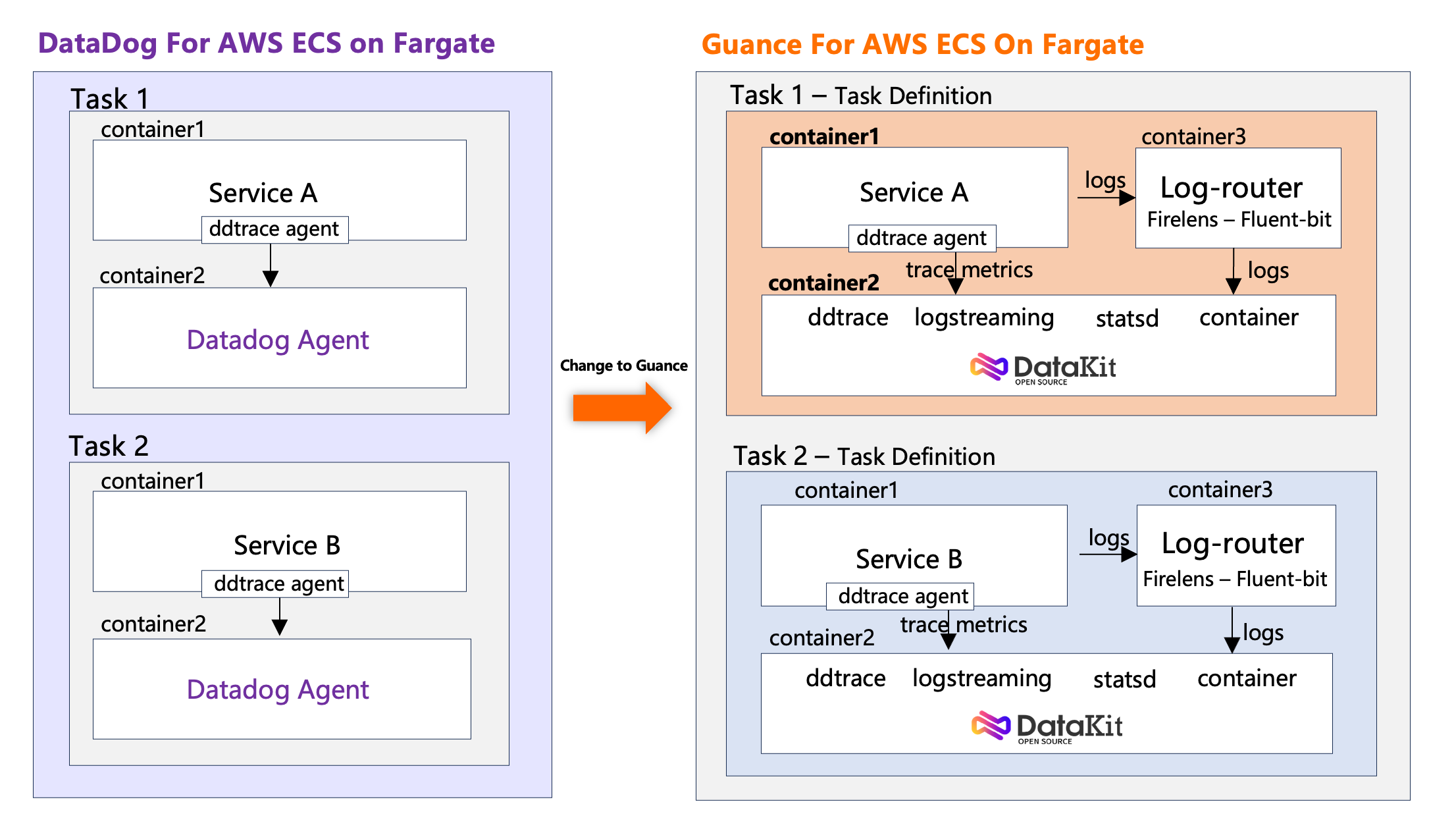
Ingest existing DDTrace data

Guance ingestion of Datadog DDTrace data allowed the team to reuse existing trace signals. Version, sampling, and dependency compatibility still require validation during migration.

Ingest existing DDTrace data

Organise observability by operating region

Business systems and the observability platform could be placed in planned regions with explicit data-boundary, network-path, and access-policy decisions.

Organise observability by operating region

What changed

More signals entered one investigation path

Development, test, and operations teams could share application-trace, log, cloud-resource, and third-party context.

Existing tracing investment could move in stages

DDTrace ingestion reduced the need to rebuild every tracing entry point at once and left room for phased verification.

The data path became an architecture decision

Deployment region, storage environment, and access controls could enter the company’s governance review; a customer story is not evidence of automatic compliance.

Frequently asked questions

Why does the CDG story mention DDTrace?

It describes moving trace data from an existing Datadog workflow. DDTrace ingestion can reuse some instrumentation and data, but compatibility, sampling, and dependencies still need validation in the actual environment.

Does flexible deployment automatically satisfy every compliance requirement?

No. Deployment and data location are individual controls. The organisation must still assess applicable law, contracts, permissions, encryption, retention, and audit requirements.

What does full stack include in this story?

The published story names end-to-end tracing, cloud-product monitoring, log analytics, and third-party monitoring data. The exact sources depend on the deployed configuration.

More customer stories